

I Lost My Compass
Transition can feel like a string of losses when things that have served us well in the past no longer seem to work. Those tried and true navigational tactics we've come to depend upon no longer give results. This can be a great time to reach outside for support and re-tooling.
“Life is trying things to see if they work.”
“He knows the water best who has waded through it.”
While working in Central Asia, I led an outdoor adventure program for young boys called Royal Rangers. The boys had the opportunity to work on what they call merits. One merit took them through the basics of using a compass as a navigational tool. Those who demonstrated proper use of the tool in a non-life-threatening situation received a badge upon completion. Now proud users of a compass to help them find their way home.
I wish navigating life transitions was that easy!
I recently watched a movie with my wife and daughter called The Finest Hours. In the film, the Coast Guard makes a daring rescue attempt off the coast of Cape Cod after a pair of oil tankers are destroyed during a blizzard in 1952. The main character who heads up the rescue attempt is named Bernie, played by Chris Pine.
Upon rescuing the survivors from the sinking tanker, Bernie begins the journey back to shore only to discover his compass is broken. "I lost my compass," he radios to his superior. With zero visibility in a small storm-tossed boat overloaded with desperate men, he has no choice but to navigate back to the safety of the harbor - without his compass.
As he pulls out of the fog and into the harbor, our hero is blessed with a warm and welcome sight. People and cars are lined up along the coast, shining their headlights in the direction of the storm-tossed sea hoping that the men would somehow catch a glimpse of the light and follow it in. The community came out to shine some light and welcome him home.
Three things capture my attention as it relates navigating transitions:
Transition calls for adjustment. In the movie, Bernie's finest hour came when he learned to navigate by paying attention to the wind and other outside elements. As he did so, his inward compass began to kick in. Transition presents an opportunity for recalibration. Adjustments and fine-tuning are necessities of getting through a difficult transition. Paying attention to the distinct characteristics of our unique transition will help us understand the ways we may need to adjust. As we navigate the storm, the Lord has promised to guide us through unfamiliar territory:
“I will lead the blind by ways they have not known, along unfamiliar paths I will guide them; I will turn the darkness into light before them and make the rough places smooth. These are the things I will do; I will not forsake them.”
When we lose something, we often stand to gain something more valuable. A broken compass is a major loss, especially in stormy conditions. Transition can feel like a string of losses when things that have served us well in the past no longer seem to work. Those tried and true navigational tactics we've come to depend upon no longer give results. This can be a great time to reach outside for support and re-tooling. One of my recent clients in transition put it this way:
“In a relatively short amount of time I have been able to capture insights from the entirety of my life and translate them into a more clear strategy. Not only have I gained a better understanding to navigate through life but I have also slowly learned how to aid others in similar situations.”
We may feel a bit lost and storm-tossed without our compass. But with some intentionality we can end up gaining valuable life skills and creative insights to guide us through transition and set us up for success on the other side.
There are others waiting to receive us on the other side. I know. This is not always true. Travelers have reached their destinations with little to no welcome or support. But in the age of social networking, there are more ways than ever to let people know you're on the way and that you could use some help. If your transition involves a geographical move, let me encourage you to get intentional about building relationships with those waiting on the other side of your transition. There may be something they can do to help you experience a smoother landing upon your arrival. They can certainly pray for you, and often they are willing to give emotional, logistical and other practical support. But we must be intentional about reaching out, letting them know we are coming and asking clearly for the support we feel we need.
As you near the end of transition, I'm hoping some light will emerge out of the fog to give you hope and welcome you home - wherever home may be.
See you on the other side!
Get help navigating your transition HERE

Root Awakening
Certain big questions loom large in transition. And the good news is that transition seasons are fertile ground for discovery if we're asking the right questions. Here are some of the right ones to be asking...
I'm pretty much bald. Have been for some time. It was in the gene pool, and I really don't have a problem with it. I've never had a second thought about passing up some product which claims to restore the roots under my scalp and magically grow a thick head of hair. Not gonna fall for it.
Last month I was a guest in the home of some friends. As I entered the shower I noticed a shampoo product called Root Awakening. I confess, I had to try it. Needless to say, the product failed to live up to its name. Guess it's too late for me.
In transition, I haven't been very successful at reviving dead roots. I once tried, during a year in the states between overseas assignments. It seemed to hold the magical formula. I was back in the town of my growing up years, revisiting people and places I once knew so well. It felt very nostalgic. But I failed to factor in that so much had changed during my long time away. Nostalgia ignores the reality of change. Years flew by and life went forward without me. Instead of sulking and feeling left behind, I needed to find stability somewhere else.
Things began to make more sense when I started paying attention to the roots.
Does your transition have you feeling rootless? Either gradually or all at once, you've been yanked out of your cozy environment, roots dangling. For some of us, the roots went down deep, which made the pulling hurt even more. For others, maybe the roots weren't as deep. But it still hurts.
In certain situations, the transition was never forced upon us. We chose it ourselves, but that doesn't mean it's easy.
It may be too late for a guy like me to grow hair on his head, but it's never too late to rebuild the root system through transition. Three roots that need to be looked after are:
- The roots of identity. Who am I really, at the core of my being? What false identities have I been trusting in?
- The roots of purpose. Why am I here? What am I meant to do? What value does it have? What's important?
- The roots of relationship. With whom should I connect? Who will be my friends? What will my support system look like?
These big questions and others like them loom large in transition. And the good news is that transition seasons are fertile ground for discovery if we're asking the right questions.
The chaos of transition subsides when we wrestle with questions that promote root growth. If you're in a transition right now, let me encourage you to wrestle with the big questions in your personal times of prayer and reflection. It may also be helpful to process these questions with a trusted friend, counselor or life coach.
Could it be that in transition God is calling us back to our roots? And roots – good roots - bring about strength, consistency, and further growth.
A song we sing in our church states that God and his love are constant through the trial and the change. Even when life gets turned upside down in transition, we have this constant assurance.
“But blessed is the one who trusts in the Lord, whose confidence is in him. They will be like a tree planted by the water that sends out its roots by the stream. It does not fear when heat comes; its leaves are always green. It has no worries in a year of drought and never fails to bear fruit.”
Are you preparing for growth by taking care of the roots? Transitions come and go. That which keeps us rooted remains the same.
Get help with your transition HERE
Disillusionment and the Cross-Cultural Worker
Without correction, the disillusioned worker may be able to continue in a career, but it's much more challenging to stay faithful to a calling. The good news is that disillusionment may be just what we need to re-calibrate and move forward.
1996-1999. Our first term of service in a faraway land. A roller coaster ride for sure: Civil war. A subsequent peace treaty. More unrest. A trip back home for the birth of our second child. During that time, we learned of my dad's diagnosis of cancer. Less than a year later, we were back in the USA for his funeral. Throughout those three years, we were watched closely and questioned regularly by government authorities. In the mix of it all, we endured a season of crisis within the NGO (humanitarian organization) we were working with.
As I look back, it was three years in which I cycled through feelings of hopelessness and great excitement. In the worst of times, I questioned my calling. I'm just now remembering a conversation with my wife in our living room. The NGO we worked with was imploding due to interpersonal conflicts which had been boiling under the surface. After another emotionally exhausting day of meetings, I came home and told my wife it was time for us to give up and go home. If she had agreed, I would have been tempted to start packing. And the whole terrible, beautiful story would have looked much different today. We ended up staying (and in many ways thriving) another 15 years in the same location.
For most expat workers, myself included, what brings us to the point of disillusionment is not usually war, or a crisis in the family, or sickness, or even the death of a family member back home. Although those events are the source of much stress and strain, the thing that often brings us to the breaking point is failed relationships, especially among our expat colleagues in our companies and on our teams.
My first term is a good case study. With all of the hazards of cultural adjustment and personal life encountered and endured in those tumultuous 3 years, the thing that brought me to the lowest point of despair was the hopelessness I felt due to failed relationships among my expat and local colleagues. The same may be true for you. Nothing messes with a sense of calling and causes feelings of disillusionment more than relational issues. Here's why:
We feel distracted from the "real" work. Nobody comes to the field expecting to spend loads of time dealing with interpersonal conflict and unresolved issues among fellow workers. Language acquisition and effective, productive ministry is what we're after, right? But sometimes we find ourselves caught in the middle of a crisis which becomes so distracting, physically and emotionally, that we have little capacity for anything else. If this persists, it can lead to the next thing...
Disillusionment sets in. When relationships go south, our world of ideals and expectations can be shaken. I personally recall thinking to myself, If this is what cross-cultural service is about, I want nothing to do with it. Over the years, I have sat with a good number of colleagues who have felt the same way.
Without correction, the disillusioned worker may be able to continue in a career, but it's much more challenging to stay faithful to a calling. Disillusionment is dangerous because it fosters a critical spirit which poisons the pot.
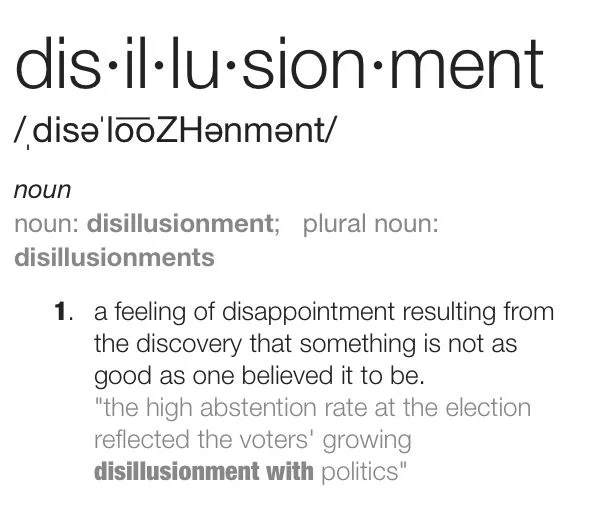
The good news is that disillusionment may be just what we need to re-calibrate. One definition of the word is "to free or be freed from illusion". In other words, it allows the discouraged person to have their false ideals and expectations corrected and to be o.k. with some of the messiness which life dishes out.
Let's face it. Relationship issues are an occupational hazard of cross-cultural service. But I'm convinced it's possible to thrive and stay in the game even during seasons of relational strain. Here's a few quick tips:
Pre-Arrival...
Are you getting ready to go? Go expecting a mix of the good, bad and ugly when it comes to relationships. This is not being cynical or faithless; it's simply setting realistic expectations for yourself and others. With that expectation in place, along with a determination to extend lots of grace and forgiveness, we can set ourselves up for success.
In the Trenches...
Determine not to allow negativity and gossip to poison your heart and mind. Refrain from making judgements about locals or expats based on hearsay and one-off encounters. Get to know them yourself. Give it time.
Remember, we reap what we sow. Plant good seed in ALL your conversations.
In the Home Stretch...
To the best of your ability and as far as it depends on you, keep on sowing good seed to the very last day. In this way, you will leave behind the aroma of Christ in each situation.
And whatever you do, don't leave bitter. Life's too short for that.
“See to it that no one falls short of the grace of God and that no bitter root grows up to cause trouble and defile many.” -Hebrews 12:15 NIV
Feeling a bit disillusioned? Walking through a messy transition? As your coach, I'm here to help. Contact me.