

You're Not Stuck - You're In Transition
You may not be burned out or failing—something may simply be shifting. This reflection explores how to recognize when you’re in a true season of transition and why feeling “stuck” is often part of a faithful discernment process.
There’s a moment many leaders reach when effort stops producing clarity.
You’re still faithful.
Still responsible.
Still showing up.
But something feels off.
Energy is lower than it used to be. Motivation comes and goes. The strategies that once worked don’t seem to land the same way anymore. You might even find yourself wondering, “Is something wrong with me?”
Often, nothing is wrong at all.
You may not be failing.
You may not be burned out.
You may be in transition.
Why Transitions Are So Hard to Recognize
Transitions rarely announce themselves clearly. They don’t arrive with a formal invitation or a checklist of next steps. Instead, they show up quietly—through loss, restlessness, disorientation, or a growing sense that a chapter is closing even if the next one hasn’t begun.
Most of us were taught to interpret these feelings as problems to solve or obstacles to push through. But transitions don’t respond well to pressure. In fact, pushing harder often makes the fog thicker.
That’s because transitions aren’t just about change. They’re about letting go, waiting, and eventually becoming.
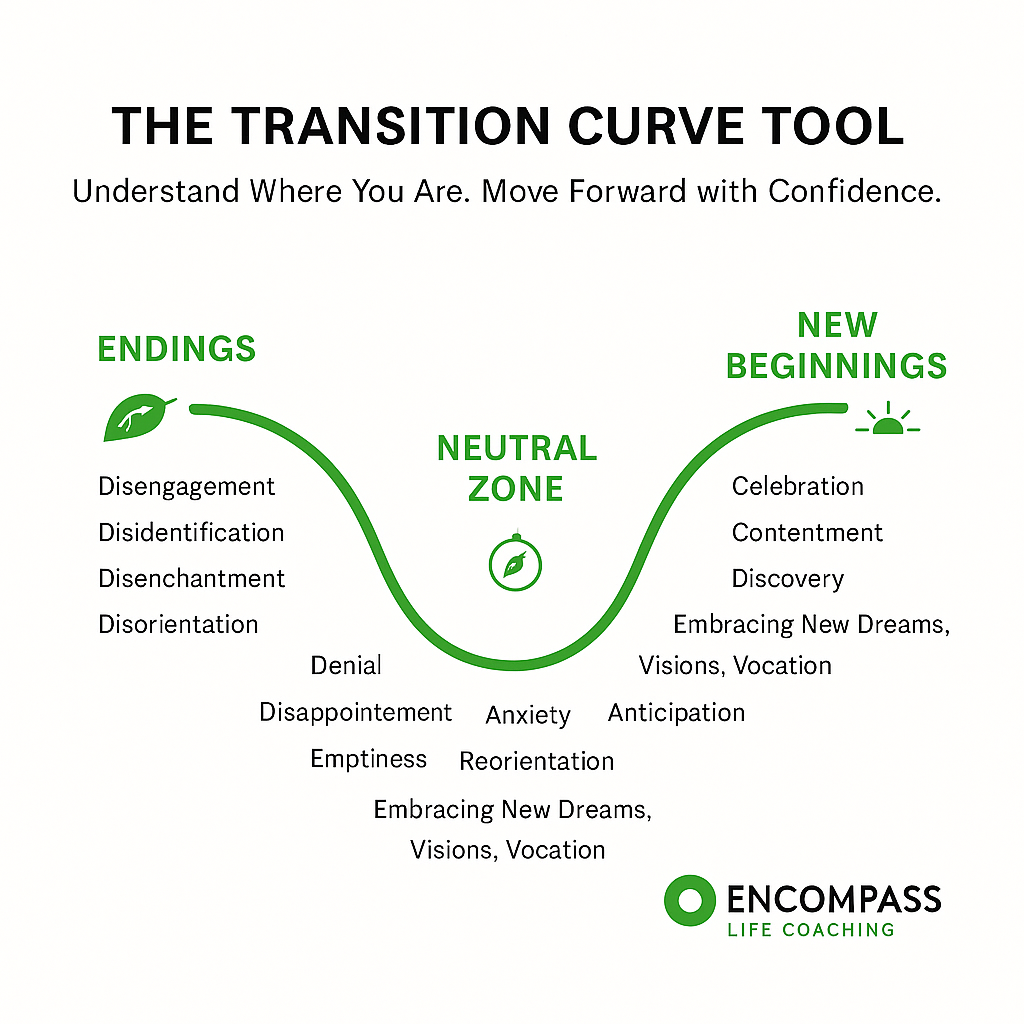
One of the most helpful tools I use in transition work is something called the Transition Curve. It names three common phases people move through during significant life transitions. You don’t need to identify with everything here—often one or two words are enough to recognize where you are.
Many people are surprised by how much relief comes from simply seeing their experience reflected here.
1. Endings
This is where something familiar is coming to a close—sometimes by choice, sometimes not. Endings often carry a mix of emotions: grief, relief, disappointment, confusion, even celebration. What’s ending might be a role, a season of ministry, a sense of identity, or a long-held expectation.
And here’s something to remember: Even good endings involve loss.
2. The Neutral Zone
This is the space most people dislike the most—and try to escape the fastest. The Neutral Zone is marked by uncertainty, lower energy, disorientation, and often reduced productivity. The old way no longer fits, but the new way hasn’t taken shape yet.
Here’s the important part: The Neutral Zone is not a mistake.
It’s a necessary space where real discernment happens. Creativity, clarity, and new direction are often formed here—but slowly.
3. New Beginnings
Eventually, something new starts to emerge. There’s tentative hope, curiosity, and a growing sense of alignment. New language forms. New commitments take shape. But this phase can’t be rushed. It only comes after Endings are honored and the Neutral Zone is lived through.
Why “Waiting It Out” Rarely Works
Many leaders try to survive transition by telling themselves, “I just need to get through this.” But transitions aren’t something you get through—they’re something you move with.
When you treat a transition like a delay or disruption instead of a process, you may:
Rush decisions to relieve discomfort
Over-spiritualize uncertainty instead of discerning it
Assume low energy means you’re doing something wrong
In reality, transitions often ask for a different posture—not more effort, but more attentiveness.
A Gentle Invitation
If any of this resonates, here’s a simple place to start—not to fix anything, just to notice:
What feels like it’s ending in my life or leadership right now?
What feels unclear, unfinished, or “in between”?
Where might I be expecting clarity too early?
You don’t need answers yet.
You don’t need a five-year plan.
You may simply need permission to name where you are.
While transitions often feel like disruptions, they are often fertile ground for clarity, renewed purpose and growth.
—Tim
P.S.
If you’ve been feeling stuck, weary, or quietly unsettled, you don’t have to navigate that alone. Much of my work is simply creating space for leaders to locate themselves honestly, name what’s shifting, and discern next steps without rushing. If that kind of space would be helpful, I’d be glad to walk with you.
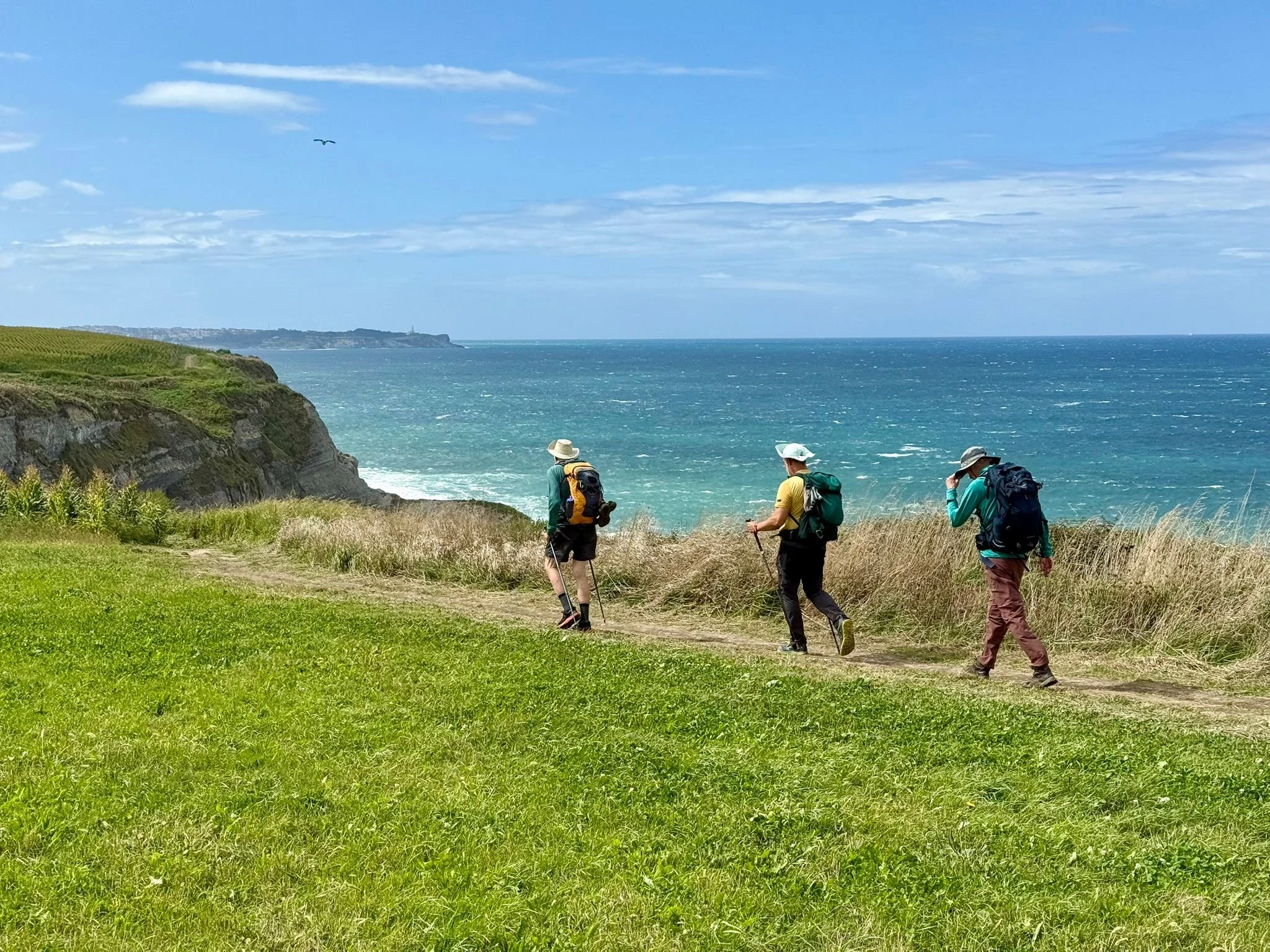
An Invitation for Couples: Walking the Camino Together
A mid-year invitation for couples to slow down, walk together, and create space for discernment, renewal, and next steps on the Camino de Santiago.

Have you been longing for space to slow down, step back, and reconnect — not only with God, but with each other?
This coming May, in partnership with our friends at The Way Between, my wife and I are facilitating a couples pilgrimage on the Camino de Santiago in northern Spain, and we’d love to invite you to consider joining us.
The Way Between is a fitting name for this pilgrimage — a sacred space between where you are now and what may be emerging next.
Why the Camino — and why as a couple?
For centuries, pilgrims have walked the Camino seeking renewal, clarity, and direction. There’s something about the simple rhythm of walking — step after step — that opens space for listening and discernment.
Walking this path together as a couple creates a unique opportunity to:
Slow your pace and step out of the noise of daily life
Have deeper conversations that don’t fit into busy routines
Discern next steps during a season of transition or change
Reconnect spiritually and relationally through shared experience
Many couples describe the Camino as a reset — not because it fixes everything, but because it creates space to notice what matters most.
A Mid-Year Pause with Intention
Walking the Camino together offers a meaningful way to pause mid-year and ask:
What is God inviting us into in this next season?
What do we need to release?
What do we want to carry forward — together?
You don’t need to have clear answers before you come. The Camino has a way of meeting you right where you are.
The Way Between | Couples Camino Pilgrimage
🗓 May 24–29, 2026
📍 El Camino de Santiago, Spain
This is a guided, intimate pilgrimage for couples, designed with spacious rhythms, shared reflection, and supportive facilitation.
👉 Learn more and register here:
https://thewaybetween.churchcenter.com/registrations/events/2909088
Whether you’re discerning next steps, navigating transition, or simply longing for intentional time together, we’d be honored to walk this Way Between with you.
Walking with you,
-Tim
P.S. You don’t need to be “figured out” to come on this pilgrimage. Many couples arrive with questions, not answers — and find that the Camino gently makes space for both.

At the Start of a New Year, Someone You Know Is in Transition
As a new year begins, many people find themselves in transition—carrying questions of identity, calling, and direction. This post explores why walking well with others during these seasons matters, and how you can be more grounded, Christ-centered, and equipped to come alongside them.
As a new year begins, let me invite you to pause for a moment and reflect:
Who in your life is standing at a crossroads right now?
Who is quietly carrying uncertainty, grief, or hope into this new season?
It might be a client.
A team member.
A friend.
A family member.
Or perhaps… it’s you.
The turning of the calendar often brings clarity for some—but for many, it magnifies what already feels unsettled. New beginnings tend to expose unresolved endings. And transitions, whether chosen or unexpected, have a way of surfacing questions that don’t have quick answers.
As someone who walks alongside others, you may already sense this. January often brings more than goal-setting conversations—it brings deeper questions of identity, calling, loss, and direction.
That’s why I want to talk with you about why walking well with people in transition matters so deeply—and why you don’t have to do it without support or tools.
The Transitions People Are Actually Walking Through
When we hear the word transition, we often think of big, visible changes. And those certainly count:
Leaving a long-held role or leadership position
Entering retirement or redefining life after full-time work
Moving to a new city, church, or ministry context
Navigating career shifts, layoffs, or vocational uncertainty
But many of the most challenging transitions are quieter and harder to name:
A leader questioning their sense of calling after burnout
A caregiver adjusting to life after loss
A pastor wrestling with identity beyond the pulpit
A coach supporting someone whose old coping strategies no longer work
A couple renegotiating roles as life seasons change
In these moments, people don’t just need encouragement.
They need someone who understands the inner terrain of transition—someone who knows how to listen beneath the words, notice what’s emerging, and gently create space for discernment.
That’s not easy work.
Why So Many Helpers Feel Stuck or Uncertain
I often hear leaders and coaches say things like:
“I’m not sure if I should challenge them or just sit with them.”
“I don’t want to rush them—but I also don’t want them to stay stuck.”
“I sense something deeper is going on, but I don’t know how to name it.”
If that sounds familiar, you’re not failing.
You’re simply encountering the complexity of transition.
Transitions involve grief and hope.
Letting go and becoming.
Disorientation and possibility.
And without a framework, it’s easy to either move too quickly—or avoid going there altogether.
An Invitation to Walk More Intentionally
This is exactly why I created my upcoming live webinar:
Walking with People in Transition
A 90-Minute Live Webinar for Coaches, Leaders, and Anyone Who Walks Alongside Others
📅 Thursday, January 22 • 10:00 AM MST
➡️ Register here:
https://encompasslifecoaching.podia.com/walking-with-people-in-transition
In this webinar, we’ll slow the pace and explore what’s really happening when people enter transition. Together, we’ll:
Step into the lived experience of those navigating change
Identify what tends to surface emotionally, spiritually, and relationally
Explore common growth obstacles—and hidden growth opportunities
Learn Christ-centered ways to be present without fixing or rescuing
Practice simple, effective ways to open meaningful conversations
You’ll leave with language, clarity, and tools you can bring directly into your work and relationships.
A Gift for Those Who Join Live
Everyone who attends the webinar live will receive my Walking with People in Transition Resource Packet—a thoughtfully designed set of tools to help you go deeper with clients, teams, or individuals you support.
It’s my way of equipping you not just for one conversation, but for the many transitions you’ll encounter throughout the year.
As This New Year Begins…
Transitions aren’t interruptions to the journey.
They are the journey.
And those who walk with others during these seasons are doing sacred work—often unseen, often unacknowledged, but deeply formative.
If you want to feel more grounded, confident, and spiritually anchored as you walk alongside others this year, I’d love to have you join me.
➡️ Save your spot here:
https://encompasslifecoaching.podia.com/walking-with-people-in-transition
Walking with you,
-Tim
P.S. The beginning of a new year is a powerful time to deepen your capacity as a leader and guide. If you attend the webinar live, you’ll receive the full Walking with People in Transition Resource Packet—tools you can return to again and again as you walk with others through change.