
Walking in the Way
I’ve been reflecting on my relationship with uncertainty, especially in seasons when there has been little to no sense of direction. Have you ever been in one of those slumps? Are you in the middle of one currently? How are you framing your view of the unknown? Through the lens of curiosity or resistance?
And let us run with perseverance the race marked out for us… -Hebrews 12:1b
In life I’m a walker, not a runner. Regardless, the thought I want to convey is the same. I’ve learned that walking takes perseverance too. I’ve been reflecting on my relationship with uncertainty, especially in seasons when there has been little to no sense of direction. Have you ever been in one of those slumps? Are you in the middle of one currently? How are you framing your view of the unknown? Through the lens of curiosity or resistance?
The scripture is clear. The race (road, path, journey, calling, assignment) is marked out for us by God. We sometimes think we’ve missed the signpost. Could it be that the signs are just more spaced out than we originally thought? Or hidden from plain sight in order to entice the seeker in us? And could all of this be His “way” of nurturing our faith and growing us into people of character who know how to endure?
This idea is not unlike my experience of walking the way of the pilgrim, the El Camino de Santiago. My wife and I completed a 100 mile stretch of the trail in 2022. In just over a month from now, we return for more, albeit a different section of the trail…this time leading a group of like-minded couples.
The scallop shell symbol, famous along the Camino, appears once in a while along the way to ease the mind of the questioning pilgrim. This appeals to the planner in me. There is something that comes alive in me upon the sight of it. Yes, I say to myself, you are heading in the right direction. Who doesn’t like a bit of confirmation?
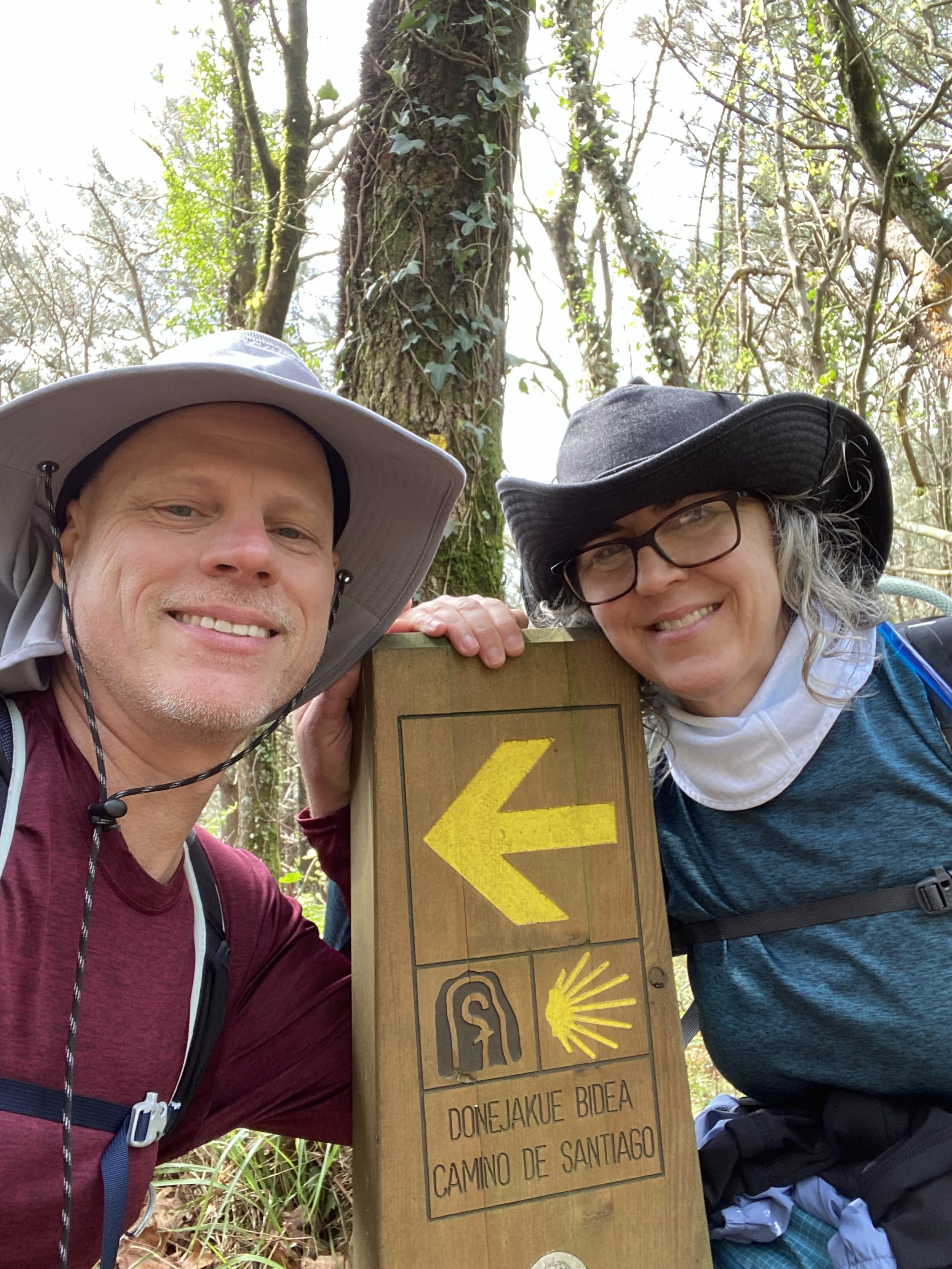
Walking the Camino somewhere in Northern Spain, 2022
However, there are long stretches of the trail void of markers. One does not always get to see the sign in front of them shouting “this is the way” (Mandalorian creed anyone?). But just often enough the pilgrim will spot the scallop shell etched into wood, dirt or stone, a welcome assurance that they are heading in the right direction.
In our faith journeys, God gives us markers along the way, signposts to encourage us and give us a sense of confidence that he is leading and directing. Not all of the time, remind you. The signs can be few and far between. Nothing predictable or formulaic. A God Who inspires wonder and mystery will have none of that. Nonetheless, He’s good at what he does in forming the human soul. He knows what we need and when.
Personally, I’ve navigated large gaps and spaces of uncertainty, and plenty confusion to go with it. I’ve longed for clarity in those seasons. Can you relate? I’ve missed a few signs along the way, having to retrace my steps. I’ve cried out for clarity. Maybe I should have been praying for trust instead?
This is why I love doing what I do as a coach, walking with others through transition seasons. So much of the process is about becoming OK with uncertainty, learning to trust. It’s the questions which drive curiosity. 100% confidence all the time loses its luster and produces stagnation.
We walk in life with the expectancy that the next mile-marker will confirm what we hope for. Not full clarity. Not total confidence. Certainly not completion (Is the real race ever really completed?). But a firm conviction that we haven’t just stumbled into this place; we are here with a purpose. We are in the Way.
Digging Wells of Trust
When we dig wells of trust through the seasons - with God and with others - we are storing up a reliable source of relational capital, namely trust. Relational trust is something valuable we can draw from when navigating tough transitions marked by uncertainty.
Don’t wait until you’re thirsty to dig a well. – African Proverb
I like to compare the process of trust building with the ancient practice of digging wells. In the Bible, wells were regularly places of divine appointments and answers to prayer. They were places of provision. A good well was reliable and life-sustaining.
Likewise, when we dig wells of trust through the seasons - with God and with others - we are storing up a reliable source of relational capital, namely trust. Relational trust is something valuable we can draw from when navigating tough transitions marked by uncertainty.
Nowhere does this show up more than in our conversations during heated transition moments. Yes, you know what I’m referring to….those moments in seasons of change when our trust well has run dry and we are most prone to become impulsive, impatient and defensive.
Creating wells of trust involves the initial work of establishing (think digging) and the ongoing work of maintenance (think clearing debris). Establishing wells of trust takes initiative, discipline and trustworthiness. Maintaining wells of trust may involve seeking reconciliation, defending and protecting trust, and advocating for each other.
Conversations are key components to digging wells of trust. In fact, trust can only go so deep without open, honest dialogue. But these conversations, particularly when transition is at the core, can be extremely challenging. To complicate matters, there may be a history of poor communication and offense. The good news is that resets are possible, and here’s a few tips that can help:
Communicate don’t just comment.
One-off remarks and voicing opinions outside of healthy conversations can be detrimental to trust building. One-sided comments usually break down rather than build trust. Hit the pause button and invite healthy dialogue.
Validate what you’re hearing the other person say, even when you don’t agree with what is being said.
Try hard to understand the other person’s point of view through active listening. Let them know you’re hearing their concerns and feelings around the topic. Listen without interruption and summarize what you’ve heard. This approach is validating toward the other person and has the potential to break down walls of mistrust that have been built up.
Use questions to move toward a problem-solving, non-defensive mindset.
I can tell when I’ve taken a defensive posture because I’m doing more telling than asking. Not only does this signal my own own defensiveness, it also causes the other party to respond in a similar way. Before we know it, we’ve multiplyied offenses and stirred up defense mechanisms. Shifting to question mode and putting the problem on the table can help people let down their guard. Then we can get back to working together to solve complex issues inherent in transition.
Build in some flexibility.
Transitions can be emotional roller-coaster rides. Some changes we never see coming. They blindside us. The person in transition will appreciate some flexibility and space to explore options that come up, even after they’ve made a decision that seems firm. This is the grace principle at work. Let’s not get so legalistic and rigid that we ignore personal needs and withhold compassion from someone who is navigating tough choices brought about by change.
Here’s to establishing and maintaining deep and lasting wells of trust in transition seasons!
-Tim
P.S. I have coaching spots available in 2024! Book a complementary discovery call with me HERE.