

Transition Talk
Conversations during seasons of transition have the potential to become volatile. We may go into a meeting with the best of intentions, but the insecurity and anxiety connected with transition can trip us up, and before we know it we are saying things we regret.
“Do not let any unwholesome talk come out of your mouths, but only what is helpful for building others up according to their needs, that it may benefit those who listen.” -Ephesians 4:29 NIV
Conversations during seasons of transition have the potential to become volatile. We may go into a meeting with the best of intentions, but the insecurity and anxiety connected with transition can trip us up, and before we know it we are saying things we regret.
This same insecurity and anxiety causes others to withdraw. Whether the conversation is with a family member, friend, co-worker, or simply the clerk at the grocery store, we can find ourselves preoccupied and disengaged. We turn inward, feeling like the present has no real purpose. Mentally and emotionally we are already on to the next thing, whatever that is.
When these become our default responses in transition conversations 1) the talks we should have never occur because avoidance is easier in the short-term, or 2) the conversation takes place, but has a negative outcome for both parties. Either way, successful transition is hindered because of a short-term approach.
A great goal to have for healthy transition is to maintain a long-term perspective. If you are the one leaving, ask yourself, Could I circle back to these relationships 5 years from now? 10 years from now? Project yourself into that situation. How do you want your next encounter with this individual to feel?
If you are the one staying you might ask, How do I feel about our relationship? What could make it better? When it comes time for me to make a transition, how would I like to feel upon my departure? How can I help this person feel that way?
This long-term approach can give us the motivation we need to invest in life-giving conversations, even through difficult transitions.
So, how does transition impact your social skills? Are you more likely to speak out of impatience or anger? Or would you prefer to crawl into your transition "shell", never to be seen again? Either way, with some long-term thinking, some great counsel from God's word, and a shot of courage, you can successfully navigate your transition, and help others to do the same.
What would it look like to see each conversation as an opportunity to affirm and encourage some really significant people in your life? Ephesians 4:29 sets the backdrop for a really great conversation to take place, even during high stress transition times. When coupled with David Pollack's RAFT model for healthy transitions, the potential is there to transform transition conversations into what they should be: AFFIRMING.
Need help navigating your transition? Go HERE.

The Two Sides of Transition
Whether transition is forced upon us or comes about by personal choice, making it to the other side requires that we intentionally process the loss and plan for the next productive season. Is it possible to walk through a major life transition with both hands full, one doing the work of grieving losses, and the other gradually filling up with good seed to plant in rich soil?
“Restore our fortunes, Lord, like streams in the Negev. Those who sow with tears will reap with songs of joy. Those who go out weeping, carrying seed to sow, will return with songs of joy, carrying sheaves with them.” -Psalm 126:4-6 NIV
This passage from the book of Psalms speaks about the reality of grieving loss while carrying something to invest into the future. Both are necessary components of successful transitions. One hand acknowledges and affirms the people, places and things we leave behind. The other hand symbolizes the hope we carry into the future -the hope to plant, cultivate and reap something new and beautiful. Acknowledging loss and cultivating hope: two sides of the transition coin.
Whether transition is forced upon us or comes about by personal choice, making it to the other side requires that we intentionally process the loss and plan for the next productive season. Is it possible to walk through a major life transition with both hands full, one doing the work of grieving losses, and the other gradually filling up with good seed to plant in rich soil? Yes! So, why not allow God to fill at least one of your hands with abundant seed to sow on the other side of the transition? He is able to do that - even while the loss still hurts.
Sometimes transitions can seem chaotic. Nothing feels right. Nothing looks right. Nothing works. Maybe it's time to re-define transition, to infuse our experience with a sense of purpose. What if transition = transformation? You can read more about this HERE in a great post by one of my mentor coaches. I'll end this post with some encouragement from Romans 5:3-5 MSG...
“There’s more to come: We continue to shout our praise even when we’re hemmed in with troubles, because we know how troubles can develop passionate patience in us, and how that patience in turn forges the tempered steel of virtue, keeping us alert for whatever God will do next. In alert expectancy such as this, we’re never left feeling shortchanged. Quite the contrary—we can’t round up enough containers to hold everything God generously pours into our lives through the Holy Spirit!"
Working with a qualified life coach is a great way to process both sides of the transitions coin. Click Here to learn more about working with me as your transitions coach.
Seasonal Friendships
How do I find the capacity to reach out to one more person who might not even be interested in cultivating a friendship with me? Worse yet, what if we really hit it off? Yet another painful goodbye down the road.
I was mostly fine growing up with one or two good friends. I say mostly fine because no doubt I could have benefited from having more friends. When there was a friendship deficit in my life, I spent more time fishing and hunting, just me and my dog. That was before I grew up and moved off to college, leaving my dog, shotgun and fishing pole behind.
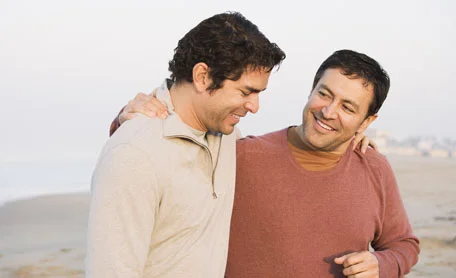
Fast forward a few decades later. I've been reminded of the value of friendship, particularly having a friend or two with whom I can have open, authentic conversations. Someone to whom I've given permission to speak into my life, even if what they say is hard to hear.
I currently have this level of friendship in my life, both with my wife and a couple of guys. I have to be intentional about opening up. It's not always easy, and sometimes I wait too long. I'm still learning.
David and Jonathan were blessed with authentic friendship (1 Samuel 18:1-4). They embraced, shared their feelings for each other, and supported and defended one another. They opened up to each other. And they were real men.
A good friend is both a gift and a tool for spiritual formation in our lives (Proverbs 27:6,17). But how do cross-cultural workers living with constant transition find and keep them?
One way is to cultivate seasonal friendships. If you've lived in the transient expat community for any amount of time, you are well acquainted with goodbyes. You have them rehearsed. Then there's the new faces who move into the community. How do I find the capacity to reach out to one more person who might not even be interested in cultivating a friendship with me? Worse yet, what if we really hit it off? Yet another painful goodbye down the road.
For what it's worth, here's what I've learned after 20 years living overseas: seasonal friendships are God's provision. They keep us from the dangers of disengagement and isolation. They are a means to smart soul care which leads to emotional health and spiritual vitality.
Some of our friendships may be seasonal in terms of proximity, but they hold the potential to become enduring, lifelong relationships. In this sense, when we invest in a seasonal friendship we are investing for tomorrow. So go ahead and engage...again. If you're patient, the return on your investment may just surprise you!
By the way, once in a while I go back to picking up my fishing pole or shotgun, with dog in tow. Maybe my next post will be about healthy ways to disengage!
Source Thumbnail Image: http://www.mentalhealth.org.uk/help-information/mental-health-a-z/F/friendship/