
Are Results-Oriented People Less Fulfilled?
If success is merely results, I'm afraid we've missed something extremely valuable. While holding onto a vision of tangible results is important, it should never be the only thing that motivates us. What could it look like to fix our eyes less on the end result and more on the process?
Are results-oriented people less fulfilled? This question popped into my head as I was reading Changes that Heal by Dr. Henry Cloud. He states,
“Learn to value process more than result. Internalize the substance of the task as well as the product. People who are only results oriented do not often enjoy their talents. Learn to enjoy them; you will be exercising them for a long time.”
That statement may not draw crowds of success-driven people wanting to hear more. But then we would need to ask, What is success? If success is merely results, I'm afraid we've missed something extremely valuable - the importance of paying attention to the process.
Words like journey and traveler are a big part of my vocabulary, especially when it comes to telling my story and navigating challenges like transition. This language helps me to connect with other fellow travelers, cultivate a learner’s approach, and see the big picture. In other words, it enables me to engage with process while aiming for results.
I'm not always successful (Darn, do I have to define success again?) at the above approach. I can't say that I always get the results I'm looking for. Sometimes I get sucked into projects and miss opportunities to connect with people, with God and His amazing creation along the way. This happens more often than I care to admit, especially in transition. My narrow focus on the end product walls me in and usurps the creative process which is so critical to a fulfilling result.
If you lean toward a results orientation, let me be the first to say that your world needs you. Your community needs you. Your family needs you. Your employer needs you. Your client needs you. Things, important things, get accomplished because you exist. But let me also encourage you to prioritize the process as well.
While holding onto a vision of tangible results is important, it should never be the only thing that motivates us.
What could it look like to fix our eyes less on the end result? For me, the list looks something like this:
- Less grumbling and complaining.
- Less rushing through and cutting corners.
- Less offense given and less taken.
- A myriad of other attitudes and approaches that fail to cultivate fulfillment.
What could it look like to lean into the process a little more?
- Richer relationships?
- Greater creativity?
- More enjoyment in life?
- Heightened self-awareness?
- A closer walk with God?
- And end result which serves myself and others well?
The possibilities are limitless when we engage with the process.
As we consider the relationship of process to end result, we might do well to ponder the following quotes.
“We have an idea that God is leading us to a particular end, a desired goal; He is not. The question of getting to a particular end is a mere incident. What we call the process, God calls the end.”
“God is not working towards a particular finish; His end is the process—that I see Him walking on the waves, no shore in sight, no success, no goal, just the absolute certainty that it is all right because I see Him walking on the sea. It is the process, not the end, which is glorifying to God.”
Once again, God turns my thinking upside down. What we call the process, God calls the end.
Back to getting results…
There is good news for us results-oriented folk: God is results-oriented, but not at the cost of a life changing and life transforming process.
““God saw all that he had made, and it was very good…””
Our Creator sets the example of a creative process culminating in satisfying, tangible results.
How are you benefiting from deeper engagement with the process? I'd love to hear from you.
Achieve greater fulfillment by starting your coaching journey HERE.
A Simple Strap
There are times in life when we need someone to come alongside and help us through
difficulties. Having someone in our lives who will listen and ask questions that produce
insights, greater personal awareness and changed behaviors can be transformative.
“One DIY project every two years!”
That was the statement expressed by my husband to slow down my DIY habit. This year we
envisioned a beautiful water feature on our property. Contemplating the best way to get all the
boulders for the waterfall, we took a late afternoon drive a short distance away from our home in search of a landscaping business. Pointing at boulders, watching a tractor load them on a big truck, and having someone else deliver them to my backyard seemed ideal.
The man we asked for directions to the landscaper wasn’t familiar with the GPS location, but he did point us toward the riverbed nearby and said that many people drove over to pick rocks up themselves. My husband couldn’t resist the challenge, so off we went.
It turns out that I have fine taste when it comes to waterfall rocks. It was that very attribute that led to our memorable afternoon. The boulders my heart longed for were across the sandbar a short distance away from the hard packed path we were traveling. Bravely, we sped across the sand onto the compressed rocks on the other side.
That wasn’t so bad! We loaded all the best boulders into the Toyota 4-Runner and headed back the way we came. Nervously, we stopped at the edge of the sand and reconsidered our bold actions. The sand somehow looked sandier now. More unstable. And the hill we had sped down so freely now looked intimidating.
Did things somehow change while we tiptoed in our flipflops through the rocks?
There have been times in my life when what was once satisfying wasn’t so satisfying
anymore. Nothing had really changed about my situation. The sand was still sandy, but
not so warm beneath my feet. The daily challenges of life I once took by the hand so
willingly, now seemed immense and drained me of all my energy.
We tried another path. It appeared firmer, but we soon learned it wasn’t. The Toyota 4-Runner
that was built to look like a 4-wheel drive wasn’t built to act like one. We had tried every
method we knew of to get out of the sand. Stuck in a situation we didn’t want to be in, we just
stood there looking at each other, shivering as the sun went down. We were in such a mess.
We didn’t know how to get out of it. How to move forward.
Would a tow truck even come out here? We had no tools or experience. We desperately
needed help.
Are you feeling like you don’t have the tools to move forward? Are you in a place in your
life where things aren’t as rewarding as they once were?
We stared in unbelief as the noise of dirt bikes and ATV's broke the silence, whipped around
and sped over to ask us if we were okay. We laughed humbly and explained our predicament.
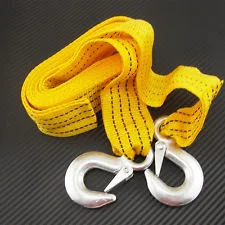
One of the young men pulled a thin strap from his tool box and proceeded to hook up his ATV to our truck as if he could pull us out himself. Really?
Would a simple strap get us out of this miserable situation? Wasn't there something more heavy duty in his toolbox? Time and effort were required for success. But, eventually, with everyone’s help we crept out of the hole we had dug for ourselves, courageously shot across the sand pit and up the hill to solid ground.
There are times in life when we need someone to come alongside and help us through
difficulties. Having someone in our lives who will listen and ask questions that produce
insights, greater personal awareness and changed behaviors can be transformative.
There are times when we need to ask for help from people with the right tools. Who is a
part of your support system? Who has been a source of encouragement in the past? If
you are stuck in an overwhelming situation and need help, our coaches are available.
Shelli Birdwell is a life coach serving her community of Ventura, CA as well as those living and working abroad. She and her husband spent 8 years in Central Asia before returning to California in 2007. They have two adventurous sons, 19 and 22, and a beautiful daughter-in-law who has recently joined the male-dominated family! When Shelli isn’t thinking of DIY projects for her husband to complete, she loves to garden, take long walks at the beach with her two chocolate labs, read and spend quality time with her husband of 25 years. Connect with Shelli at Encompass Life Coaching.

I Lost My Compass
Transition can feel like a string of losses when things that have served us well in the past no longer seem to work. Those tried and true navigational tactics we've come to depend upon no longer give results. This can be a great time to reach outside for support and re-tooling.
“Life is trying things to see if they work.”
“He knows the water best who has waded through it.”
While working in Central Asia, I led an outdoor adventure program for young boys called Royal Rangers. The boys had the opportunity to work on what they call merits. One merit took them through the basics of using a compass as a navigational tool. Those who demonstrated proper use of the tool in a non-life-threatening situation received a badge upon completion. Now proud users of a compass to help them find their way home.
I wish navigating life transitions was that easy!
I recently watched a movie with my wife and daughter called The Finest Hours. In the film, the Coast Guard makes a daring rescue attempt off the coast of Cape Cod after a pair of oil tankers are destroyed during a blizzard in 1952. The main character who heads up the rescue attempt is named Bernie, played by Chris Pine.
Upon rescuing the survivors from the sinking tanker, Bernie begins the journey back to shore only to discover his compass is broken. "I lost my compass," he radios to his superior. With zero visibility in a small storm-tossed boat overloaded with desperate men, he has no choice but to navigate back to the safety of the harbor - without his compass.
As he pulls out of the fog and into the harbor, our hero is blessed with a warm and welcome sight. People and cars are lined up along the coast, shining their headlights in the direction of the storm-tossed sea hoping that the men would somehow catch a glimpse of the light and follow it in. The community came out to shine some light and welcome him home.
Three things capture my attention as it relates navigating transitions:
Transition calls for adjustment. In the movie, Bernie's finest hour came when he learned to navigate by paying attention to the wind and other outside elements. As he did so, his inward compass began to kick in. Transition presents an opportunity for recalibration. Adjustments and fine-tuning are necessities of getting through a difficult transition. Paying attention to the distinct characteristics of our unique transition will help us understand the ways we may need to adjust. As we navigate the storm, the Lord has promised to guide us through unfamiliar territory:
“I will lead the blind by ways they have not known, along unfamiliar paths I will guide them; I will turn the darkness into light before them and make the rough places smooth. These are the things I will do; I will not forsake them.”
When we lose something, we often stand to gain something more valuable. A broken compass is a major loss, especially in stormy conditions. Transition can feel like a string of losses when things that have served us well in the past no longer seem to work. Those tried and true navigational tactics we've come to depend upon no longer give results. This can be a great time to reach outside for support and re-tooling. One of my recent clients in transition put it this way:
“In a relatively short amount of time I have been able to capture insights from the entirety of my life and translate them into a more clear strategy. Not only have I gained a better understanding to navigate through life but I have also slowly learned how to aid others in similar situations.”
We may feel a bit lost and storm-tossed without our compass. But with some intentionality we can end up gaining valuable life skills and creative insights to guide us through transition and set us up for success on the other side.
There are others waiting to receive us on the other side. I know. This is not always true. Travelers have reached their destinations with little to no welcome or support. But in the age of social networking, there are more ways than ever to let people know you're on the way and that you could use some help. If your transition involves a geographical move, let me encourage you to get intentional about building relationships with those waiting on the other side of your transition. There may be something they can do to help you experience a smoother landing upon your arrival. They can certainly pray for you, and often they are willing to give emotional, logistical and other practical support. But we must be intentional about reaching out, letting them know we are coming and asking clearly for the support we feel we need.
As you near the end of transition, I'm hoping some light will emerge out of the fog to give you hope and welcome you home - wherever home may be.
See you on the other side!
Get help navigating your transition HERE