
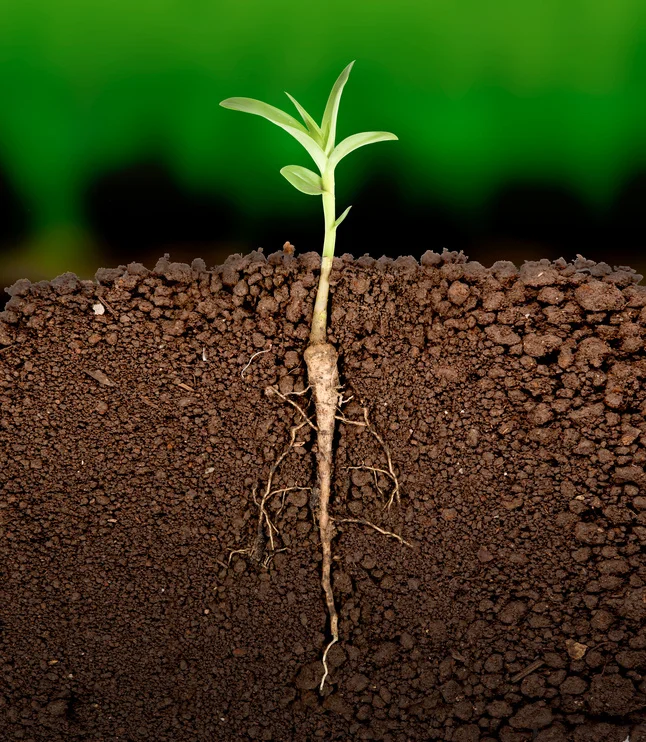
Root Awakening
Certain big questions loom large in transition. And the good news is that transition seasons are fertile ground for discovery if we're asking the right questions. Here are some of the right ones to be asking...
I'm pretty much bald. Have been for some time. It was in the gene pool, and I really don't have a problem with it. I've never had a second thought about passing up some product which claims to restore the roots under my scalp and magically grow a thick head of hair. Not gonna fall for it.
Last month I was a guest in the home of some friends. As I entered the shower I noticed a shampoo product called Root Awakening. I confess, I had to try it. Needless to say, the product failed to live up to its name. Guess it's too late for me.
In transition, I haven't been very successful at reviving dead roots. I once tried, during a year in the states between overseas assignments. It seemed to hold the magical formula. I was back in the town of my growing up years, revisiting people and places I once knew so well. It felt very nostalgic. But I failed to factor in that so much had changed during my long time away. Nostalgia ignores the reality of change. Years flew by and life went forward without me. Instead of sulking and feeling left behind, I needed to find stability somewhere else.
Things began to make more sense when I started paying attention to the roots.
Does your transition have you feeling rootless? Either gradually or all at once, you've been yanked out of your cozy environment, roots dangling. For some of us, the roots went down deep, which made the pulling hurt even more. For others, maybe the roots weren't as deep. But it still hurts.
In certain situations, the transition was never forced upon us. We chose it ourselves, but that doesn't mean it's easy.
It may be too late for a guy like me to grow hair on his head, but it's never too late to rebuild the root system through transition. Three roots that need to be looked after are:
- The roots of identity. Who am I really, at the core of my being? What false identities have I been trusting in?
- The roots of purpose. Why am I here? What am I meant to do? What value does it have? What's important?
- The roots of relationship. With whom should I connect? Who will be my friends? What will my support system look like?
These big questions and others like them loom large in transition. And the good news is that transition seasons are fertile ground for discovery if we're asking the right questions.
The chaos of transition subsides when we wrestle with questions that promote root growth. If you're in a transition right now, let me encourage you to wrestle with the big questions in your personal times of prayer and reflection. It may also be helpful to process these questions with a trusted friend, counselor or life coach.
Could it be that in transition God is calling us back to our roots? And roots – good roots - bring about strength, consistency, and further growth.
A song we sing in our church states that God and his love are constant through the trial and the change. Even when life gets turned upside down in transition, we have this constant assurance.
“But blessed is the one who trusts in the Lord, whose confidence is in him. They will be like a tree planted by the water that sends out its roots by the stream. It does not fear when heat comes; its leaves are always green. It has no worries in a year of drought and never fails to bear fruit.”
Are you preparing for growth by taking care of the roots? Transitions come and go. That which keeps us rooted remains the same.
Get help with your transition HERE

Staying in the Game When You Love What You Do
Are you one of those, like me, who genuinely love what you do -most of the time? That's a gift to be grateful for. How can we best steward it? We can love our jobs more and stay in the game longer by focusing on 3 key areas...
Sometimes I can't wait to prepare that next message or write my next blog post or go to the next staff meeting. I love what what I do, most of the time. I've loved it for the past 20 years of living overseas. Mostly.
I recently submitted an article for my friends at Velvet Ashes, a community of brave women serving cross-culturally. The post is titled, Staying in the Game. As I reflected on the readers and read their comments, I thought to myself, They really love most of what they do, even though their lives can be really hard. A big reason why these expats and many others like them love what they do is because they have developed into resilient individuals, families and teams.
When I think of what is needed to stay in the game I think of resiliency. When I think of resiliency I think of the ability to bounce back from intense seasons of life. And nothing is more critical to resiliency than balance. By balance I mean consistently paying attention to each area of our lives - personal, professional, and spiritual.
When our motivation level for work is high we don't necessarily feel the need to step back and give attention to a hobby, a spiritual retreat, or to acquire some new expertise. But these initiatives create balance, leading to longevity and a creative impact we can't otherwise achieve without them. Let's explore these a bit further...
- Personal Growth. Even work we enjoy can become monotonous when we aren't paying attention to the need for personal growth. I'm talking here about other desires and interests which allow us to unplug from all things work-related, such as taking up a new hobby or reviving an old one.
A few years ago, I revived an old childhood hobby of raising game birds. I confess it was a lot of work and some expense to get off the ground. It sort of felt like a new business start-up, but it was definitely renewing because I was really detaching myself from work. Other, more simple options might include taking an art or karate class, climbing your first 14er, or teaching yourself to play the guitar. Any one of these has the necessary ingredients to put life and creativity back into our work.
- Professional Development. As a pastor and a life coach I'm literally faced with thousands of professional growth offers I could take advantage of. Seminars, webinars, on-site training programs... While these can be useful, it really doesn't need to be complicated or expensive. It could simply be something like setting a goal to read one book each quarter pertaining to your area of specialization. What are you sensing a need for as it relates to work and ministry? You name it. Resources are available to help us get even better at what we do.
- Spiritual Renewal. The roots of our spiritual lives can become dry and shallow without a regular dose of renewal. Jesus modeled regular times for renewal in his own life:
“But Jesus often withdrew to lonely places and prayed.”
“Then, because so many people were coming and going that they did not even have a chance to eat, he said to them, “Come with me by yourselves to a quiet place and get some rest.”
Solitude and doing things which get us more or less alone is essential to our overall well-being and longevity. What, apart from your work, energizes you and helps you return to the routine with renewed creativity?
Tip: Try combining personal growth and spiritual renewal into one activity. For me, learning a new worship song on the guitar can do the trick. Or, fishing on a lonely stretch of creek. What works for you?
Are you one of those, like me, who genuinely love what you do -most of the time? That's a gift to be grateful for. How can you best steward it? We can love our jobs more and stay in the game longer by developing and maintaining resiliency. A resilient life is a balanced life.
See you on the creek!
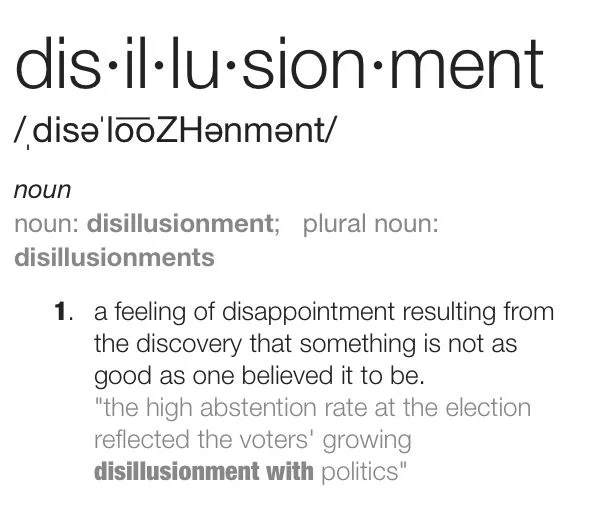
Disillusionment and the Cross-Cultural Worker
Without correction, the disillusioned worker may be able to continue in a career, but it's much more challenging to stay faithful to a calling. The good news is that disillusionment may be just what we need to re-calibrate and move forward.
1996-1999. Our first term of service in a faraway land. A roller coaster ride for sure: Civil war. A subsequent peace treaty. More unrest. A trip back home for the birth of our second child. During that time, we learned of my dad's diagnosis of cancer. Less than a year later, we were back in the USA for his funeral. Throughout those three years, we were watched closely and questioned regularly by government authorities. In the mix of it all, we endured a season of crisis within the NGO (humanitarian organization) we were working with.
As I look back, it was three years in which I cycled through feelings of hopelessness and great excitement. In the worst of times, I questioned my calling. I'm just now remembering a conversation with my wife in our living room. The NGO we worked with was imploding due to interpersonal conflicts which had been boiling under the surface. After another emotionally exhausting day of meetings, I came home and told my wife it was time for us to give up and go home. If she had agreed, I would have been tempted to start packing. And the whole terrible, beautiful story would have looked much different today. We ended up staying (and in many ways thriving) another 15 years in the same location.
For most expat workers, myself included, what brings us to the point of disillusionment is not usually war, or a crisis in the family, or sickness, or even the death of a family member back home. Although those events are the source of much stress and strain, the thing that often brings us to the breaking point is failed relationships, especially among our expat colleagues in our companies and on our teams.
My first term is a good case study. With all of the hazards of cultural adjustment and personal life encountered and endured in those tumultuous 3 years, the thing that brought me to the lowest point of despair was the hopelessness I felt due to failed relationships among my expat and local colleagues. The same may be true for you. Nothing messes with a sense of calling and causes feelings of disillusionment more than relational issues. Here's why:
We feel distracted from the "real" work. Nobody comes to the field expecting to spend loads of time dealing with interpersonal conflict and unresolved issues among fellow workers. Language acquisition and effective, productive ministry is what we're after, right? But sometimes we find ourselves caught in the middle of a crisis which becomes so distracting, physically and emotionally, that we have little capacity for anything else. If this persists, it can lead to the next thing...
Disillusionment sets in. When relationships go south, our world of ideals and expectations can be shaken. I personally recall thinking to myself, If this is what cross-cultural service is about, I want nothing to do with it. Over the years, I have sat with a good number of colleagues who have felt the same way.
Without correction, the disillusioned worker may be able to continue in a career, but it's much more challenging to stay faithful to a calling. Disillusionment is dangerous because it fosters a critical spirit which poisons the pot.
The good news is that disillusionment may be just what we need to re-calibrate. One definition of the word is "to free or be freed from illusion". In other words, it allows the discouraged person to have their false ideals and expectations corrected and to be o.k. with some of the messiness which life dishes out.
Let's face it. Relationship issues are an occupational hazard of cross-cultural service. But I'm convinced it's possible to thrive and stay in the game even during seasons of relational strain. Here's a few quick tips:
Pre-Arrival...
Are you getting ready to go? Go expecting a mix of the good, bad and ugly when it comes to relationships. This is not being cynical or faithless; it's simply setting realistic expectations for yourself and others. With that expectation in place, along with a determination to extend lots of grace and forgiveness, we can set ourselves up for success.
In the Trenches...
Determine not to allow negativity and gossip to poison your heart and mind. Refrain from making judgements about locals or expats based on hearsay and one-off encounters. Get to know them yourself. Give it time.
Remember, we reap what we sow. Plant good seed in ALL your conversations.
In the Home Stretch...
To the best of your ability and as far as it depends on you, keep on sowing good seed to the very last day. In this way, you will leave behind the aroma of Christ in each situation.
And whatever you do, don't leave bitter. Life's too short for that.
“See to it that no one falls short of the grace of God and that no bitter root grows up to cause trouble and defile many.” -Hebrews 12:15 NIV
Feeling a bit disillusioned? Walking through a messy transition? As your coach, I'm here to help. Contact me.