
Soul-Care from the Cave
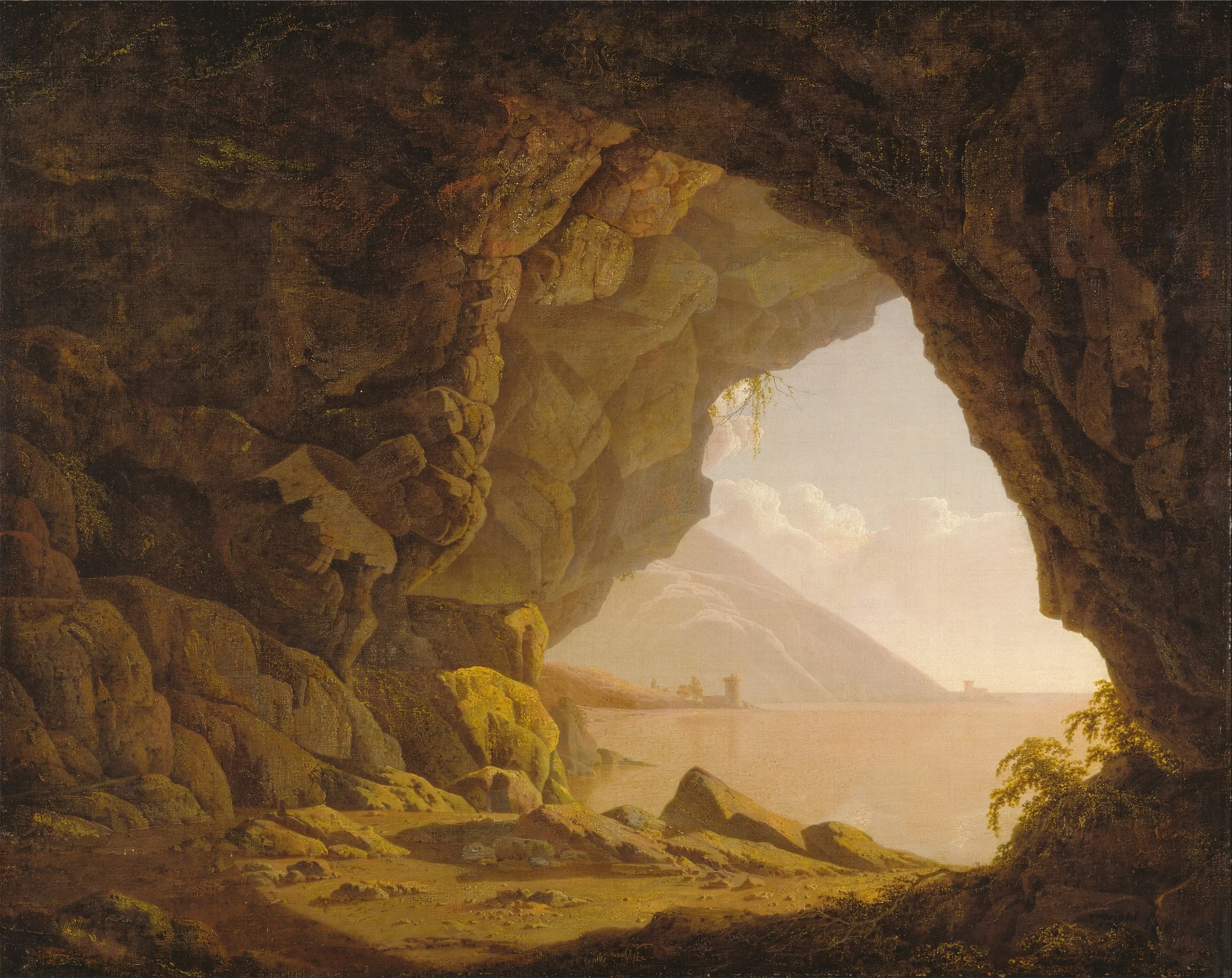
David was no stranger to caves. But this cave was more than a place of shelter for a tired shepherd boy. It was a place where he would learn resilience- how to relate to God in times of deep loss and confusion. How to steady his feet on God's promises and forge ahead with hope. Here are some ways we can learn, like David, to practice soul-care in the cave:
Read: I Samuel 22:1-2; Psalm 142 What does it look like to care for our own souls when hope feels like a distant memory? When what was promised is not delivered? David, forced to flee from a raging king, had made his temporary home in an abandoned cave. Bad news was imminent. Saul and his army were in hot pursuit, ready to take his life.
David was no stranger to caves. But this cave was more than a place of shelter for a tired shepherd boy. It was a place where he would learn resilience- how to relate to God in times of deep loss and confusion. How to steady his feet on God's promises and forge ahead with hope. Here are some ways we can learn, like David, to practice soul-care in the cave:
- Talk to God about your trouble. We can be brutally honest here. God is wise and sensitive, NOT fragile. He can handle our lists of complaints. I recently became extremely frustrated with a situation I was having to deal with. I was angry at others and God for not having solved my problems. In my frustration I said, "Leave me alone God! Lay off!" Those words surprised me as they came out of my mouth. I realized, however, that God was not shocked; he did not retreat. Those weren't the only words I said as I poured out my heart to Him. He heard every raw, gut-level complaint, and he loves me just the same. David said, "I pour out my complaint before him; I tell my trouble before him" (Psalm 142:2). We can tell God anything. He can't break and he won't run away.
- Know He Knows. We can be assured that God knows the exact place we're in and the trajectory we're on. He knows. From inside the cave, there is a lot we can't see, much we don't know. Our vision and perspective may be limited by things outside of our control. But rather than feeling forced into a corner by our limited understanding, we can choose to take advantage of the opportunities the cave gives to relate, reflect and regroup. There is a knowing which comes from this. We begin to say with David, "When my spirit faints within me, you know my way (Psalm 142:3). Yes, He certainly does.
- Give people the benefit of the doubt. People aren't always going to be in a position to help us. We come to seasons in life when nobody seems to understand or care. Those who try to help may give simple answers to complex questions. They just don't understand. This season in the cave is between us and God. That should release us from placing the burden of making it better on anyone else, and to accept them for who they are, not what they can or cannot do about our situation. David despaired, "there is none who takes notice of me; no refuge remains to me; no one cares for my soul." (Psalm 142:4) Fortunately that's not true all of the time. Just sometimes, and often in the cave.
I love how David ends his psalm in hope:
Bring me out of prison, that I may give thanks to your name! The righteous will surround me, for you will deal bountifully with me. - Psalm 142:7
I'm still learning the value of the cave, the treasures which God reserves for me when I'm willing to sit in the dark with Him for a season. How do you find ways to care for your soul in life's darker seasons? I'd love to add a few more strategies to my list.
Prayer: Jesus was sent into the wilderness (Matthew 4:1). David was forced into a cave. Whether I'm being sent to the hard places or feel forced into them by circumstances beyond my control, help me to know that You know my way. May I learn life-transforming lessons while walking with You in difficult times.
Image Source: http://all-free-download.com/free-photos/download/joseph_wright_art_artistic_218722.html
Silence and the Coaching Session
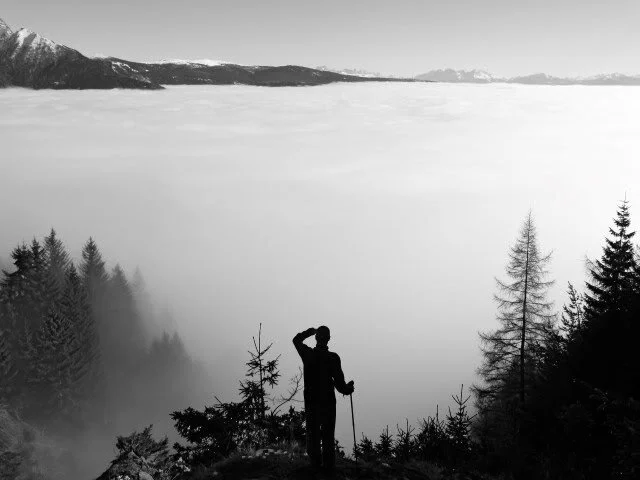
In the natural world, the quietest places are often the deepest places...the deep sea, deep into the woods, a deep cavern. These can be frightening places to explore, involving a fair amount of risk and uncertainty. In the same way, navigating silence in the coaching conversation may feel risky and uncertain. However, as coach and client embrace silence, we allow God to take us deeper into those places of discovery.
As an introvert, I tend to welcome (and need) a good degree of silence. I can sit comfortably for long periods, embracing silence as a close friend. I gain renewed energy and focus when I take time to soak in a quiet place. During times of silence, even a brief pause, I'm much more inclined to speak out of a greater sense of clarity. Outside of the coaching conversation, I have no problem with silence. But when silence overtakes a coaching session, I can start to feel uncomfortable. Too much "dead space" becomes unbearable, and I search for a way to end it. I recently invited a client to share his thoughts with me on our coaching experience. He proceeded to tell me that coaching, from his perspective, is geared toward rewarding the type-A verbal processors who are quick to speak. I learned that this particular individual did not feel heard at times. He felt like he needed permission to wait and process in silence. Had I too often short-circuited the discovery process by interrupting silence with a question?
I didn't agree with my client's conclusion that coaching favors verbal processors, but I knew he was on to something which could help me grow as a coach. So I probed a bit further. It really came down to one question for me when working with non-verbal processors and/or clients who need space and time to think through an issue before a response: How comfortable am I with silence?
Father God invites us into the quiet place. Jesus often withdrew to lonely, quiet places (Luke 5:16). He realized the need for solitude and quiet. He was comfortable in the silence. And he served powerfully out of those retreats.
Tools to Transform the Conversation: Befriending Silence in the Coaching Session
Practice solitude. We are more likely to encourage silence with our clients when we as coaches are comfortable with it. Thirty seconds of silence in the coaching session may feel like an eternity to us, but it could be really appreciated by our non-verbal, thoughtful client who needs space to process something. When we allow for this, one of the benefits is that we are more likely to get to heart level issues. We can start getting re-acquainted with silence by taking 5 minutes two or three times per day to hit the pause button. Find a peaceful place. Read a Psalm, say a prayer, or simply sit with God in silence. Silence will gradually become your friend again, and most likely you will crave more.
Affirm the non verbal processor for their often well thought out responses even when it takes some time to get there. Affirm what they value and how they are wired. Phrases like these may be helpful: Take your time. It's alright to pause here for a moment. I appreciate the way you value time to think through and process decisions.
Give your client an opportunity to prepare for the next session ahead of time. Give them a bit of homework which requires them to think through an issue before meeting with you. They will most likely come to the session feeling better prepared and more confident. That's a win for both of you! In my second to last session with the above mentioned client, I asked them to come to our final session with some feedback for me. I never dreamed they would take this so seriously! They went to work that week writing down their well thought-out reply, which proved to be very insightful and helpful.
In the natural world, the quietest places are often the deepest places...the deep sea, deep into the woods, a deep cavern. These can be frightening places to explore, involving a fair amount of risk and uncertainty. In the same way, navigating silence in the coaching conversation may feel risky and uncertain. However, as coach and client embrace silence, we allow God to take us deeper into those places of discovery.
Image Source: http://www.silencesounds.ca/
The Payoff of Persistence
A little more persistence could be just what we need to make steady progress toward our goals and dreams. Often, the assumption is that doing more and going faster are the answers. Persistence with payoff, however, must be grounded in the substance of rest, reflection, and a good dose of play from time to time.
Scripture Focus: “Come to me, all you who are weary and burdened, and I will give you rest." - Matthew 11:28
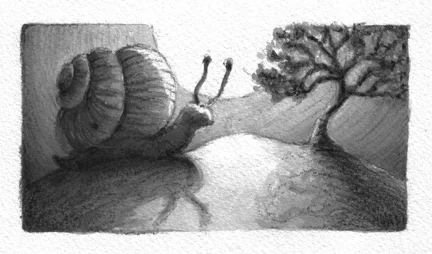
Slugs and Snails are abundant here in Istanbul. Until recently, I thought they were confined to the lower realms. Those tenacious little creatures have proven me wrong. One day last week my daughter and I marveled at a little snail which had managed to make its way up to our 2nd story kitchen window. Who says snails don't long for a higher realm, a place to catch a glimpse of something other than dirt and weeds? A bit of fresh air?
A few days later as I crawled out of bed and made my way to the bathroom, I almost stepped on a big slug meandering across the parquet floor. I was bewildered as to how a slug made it up to the third floor of my home AND managed to creep its way indoors! I must give credit to Istanbul slugs and snails for their persistence.
A little more persistence could be just what we need to make steady progress toward our goals and dreams. Often, the assumption is that doing more and going faster are the answers. Persistence with payoff, however, must be grounded in the substance of rest, reflection, and a good dose of play from time to time. This is one important aspect of self-care, giving us the staying power we need to make it to the finish line.
The slug, as it moves along, secretes a layer of mucus that it travels on, which helps prevent damage to the foot tissues (Yes, slugs do have feet!). Similarly, intentional time-outs for rest and reflection protect our souls from burnout. Like the snail confined to the ground, sometimes we lose heart, hope and strength because we fail to see the forest through the trees. Could it be time to step back, find a place of rest, and see from a new vantage point? What might God be waiting to show us? To give us?
Thought for the Day: Persistence which God rewards is grounded in rest.
Prayer: Jesus, as You invite me to come, You offer the enticement of rest. I accept Your invitation to enter into Your rest today. Help me to draw from your strength and grace in order to accomplish the work you've given me to do.
Image Source from the story Slugs and Snails by Jenny Blackford
