
Disillusionment and the Cross-Cultural Worker
Without correction, the disillusioned worker may be able to continue in a career, but it's much more challenging to stay faithful to a calling. The good news is that disillusionment may be just what we need to re-calibrate and move forward.
1996-1999. Our first term of service in a faraway land. A roller coaster ride for sure: Civil war. A subsequent peace treaty. More unrest. A trip back home for the birth of our second child. During that time, we learned of my dad's diagnosis of cancer. Less than a year later, we were back in the USA for his funeral. Throughout those three years, we were watched closely and questioned regularly by government authorities. In the mix of it all, we endured a season of crisis within the NGO (humanitarian organization) we were working with.
As I look back, it was three years in which I cycled through feelings of hopelessness and great excitement. In the worst of times, I questioned my calling. I'm just now remembering a conversation with my wife in our living room. The NGO we worked with was imploding due to interpersonal conflicts which had been boiling under the surface. After another emotionally exhausting day of meetings, I came home and told my wife it was time for us to give up and go home. If she had agreed, I would have been tempted to start packing. And the whole terrible, beautiful story would have looked much different today. We ended up staying (and in many ways thriving) another 15 years in the same location.
For most expat workers, myself included, what brings us to the point of disillusionment is not usually war, or a crisis in the family, or sickness, or even the death of a family member back home. Although those events are the source of much stress and strain, the thing that often brings us to the breaking point is failed relationships, especially among our expat colleagues in our companies and on our teams.
My first term is a good case study. With all of the hazards of cultural adjustment and personal life encountered and endured in those tumultuous 3 years, the thing that brought me to the lowest point of despair was the hopelessness I felt due to failed relationships among my expat and local colleagues. The same may be true for you. Nothing messes with a sense of calling and causes feelings of disillusionment more than relational issues. Here's why:
We feel distracted from the "real" work. Nobody comes to the field expecting to spend loads of time dealing with interpersonal conflict and unresolved issues among fellow workers. Language acquisition and effective, productive ministry is what we're after, right? But sometimes we find ourselves caught in the middle of a crisis which becomes so distracting, physically and emotionally, that we have little capacity for anything else. If this persists, it can lead to the next thing...
Disillusionment sets in. When relationships go south, our world of ideals and expectations can be shaken. I personally recall thinking to myself, If this is what cross-cultural service is about, I want nothing to do with it. Over the years, I have sat with a good number of colleagues who have felt the same way.
Without correction, the disillusioned worker may be able to continue in a career, but it's much more challenging to stay faithful to a calling. Disillusionment is dangerous because it fosters a critical spirit which poisons the pot.
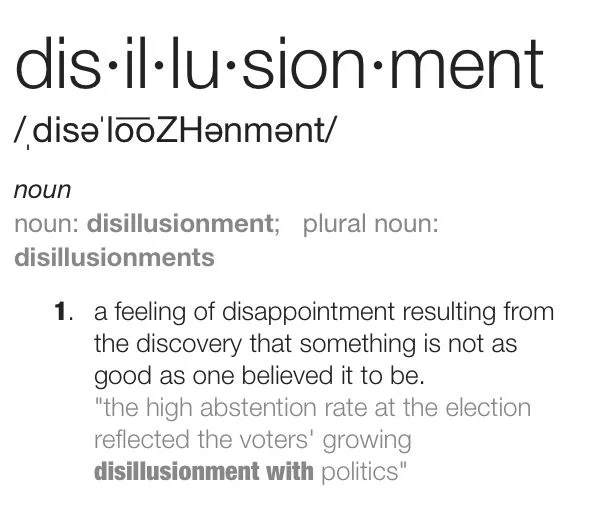
The good news is that disillusionment may be just what we need to re-calibrate. One definition of the word is "to free or be freed from illusion". In other words, it allows the discouraged person to have their false ideals and expectations corrected and to be o.k. with some of the messiness which life dishes out.
Let's face it. Relationship issues are an occupational hazard of cross-cultural service. But I'm convinced it's possible to thrive and stay in the game even during seasons of relational strain. Here's a few quick tips:
Pre-Arrival...
Are you getting ready to go? Go expecting a mix of the good, bad and ugly when it comes to relationships. This is not being cynical or faithless; it's simply setting realistic expectations for yourself and others. With that expectation in place, along with a determination to extend lots of grace and forgiveness, we can set ourselves up for success.
In the Trenches...
Determine not to allow negativity and gossip to poison your heart and mind. Refrain from making judgements about locals or expats based on hearsay and one-off encounters. Get to know them yourself. Give it time.
Remember, we reap what we sow. Plant good seed in ALL your conversations.
In the Home Stretch...
To the best of your ability and as far as it depends on you, keep on sowing good seed to the very last day. In this way, you will leave behind the aroma of Christ in each situation.
And whatever you do, don't leave bitter. Life's too short for that.
“See to it that no one falls short of the grace of God and that no bitter root grows up to cause trouble and defile many.” -Hebrews 12:15 NIV
Feeling a bit disillusioned? Walking through a messy transition? As your coach, I'm here to help. Contact me.

Turning Setbacks into Switchbacks
Why setbacks are important and how they can be leveraged as switchbacks to help us gain altitude during a transition climb.
“The path leading me to meaningful work and a way to make a living from it has been a long and twisting one. What looked at the time like setbacks or defeats look to me now more like switchbacks that enabled me to gain altitude.”
I can relate to the above quote. Central Asian mountain ranges are some of the most rugged and steep in the world. While traveling throughout that land I grew accustomed to hours of tedious climbing in order to cover the distance of just a few miles. From time to time a detour was necessary due to a recent landslide or avalanche. The setback could delay travel plans by hours, even days. One of my personal travel setbacks can be viewed HERE
The slow and tedious task of climbing upward is a good reminder that life is also full of steep, slow climbs, and a setback from time to time. From one traveler to another, I confess I haven't always seen the purpose in all the twists and turns. I've often complained, Why Lord? Where is this all going?
Here's some thoughts on why setbacks are important and how they can be leveraged as switchbacks to help us gain altitude during a transition climb:
- Setbacks reinforce our true identity. Feelings of failure and loss of identity are common among those of us who have wrestled with difficult transitions. Yet when we pause to reflect upon what is really important following a setback, we come to see the value God places on us as his kids, apart from achievement, reputation, title and position. Setbacks become switchbacks when we allow ourselves to be reminded of our true identity, and then take that awareness into the next challenge or opportunity before us.
- Setbacks are good for recalibrating. Transition seasons often present us with a myriad of options to choose from as we plan our next steps. A good portion of them are simply distractions disguised as opportunities. While some may be valid options for us to consider, others just keep popping up and getting in the way, causing loss of focus. In actuality, a closed door or rejected proposal may be just what we need to re-adjust and move forward in our transition with better clarity. Setbacks become switchbacks when we allow the natural process of God's choosing and leading to unfold in His perfect yet mysterious ways.
- Setbacks provide opportunity for inward, personal growth to catch up with outward, professional growth. Throughout certain stages of life, everything seems to coast along with little or no sign of personal or professional change. Then, sometimes gradually and sometimes all of a sudden, we find ourselves in the middle of a transition season. As we take advantage of opportunities to pray, reflect and process the change, God will use those times to deepen our spiritual roots and reinforce personal values which may have been neglected. We will begin to experience renewed vitality emotionally and spiritually, and it will feel good!
I'm curious, What setbacks of 2015 has God used to strengthen your resolve and keep you climbing in the year ahead? Has an unexpected twist or turn thrown you off balance and into a transition tailspin? What growth agenda might God have planned for you during your current transition?
“You intended to harm me, but God intended it for good to accomplish what is now being done, the saving of many lives.” -Genesis 50:20 NIV
“And we know that in all things God works for the good of those who love him, who have been called according to his purpose.” -Romans 8:28 NIV
Climb your transition with a coach HERE

Forever Friends and Random Places We've Lived
The ups and downs of transition are a good time to honor memories of people and places with a spirit of gratitude, to anchor ourselves in some part of our past when the future is uncertain.
Every day I ascend and descend that set of stairs in our home multiple times. Bedroom to bathroom to kitchen to family room, and all over again. Up and down. Down and up. But today it was different. I noticed something. I paused long enough to be reminded that sometimes, especially in transition, I lose sight of what's really important.
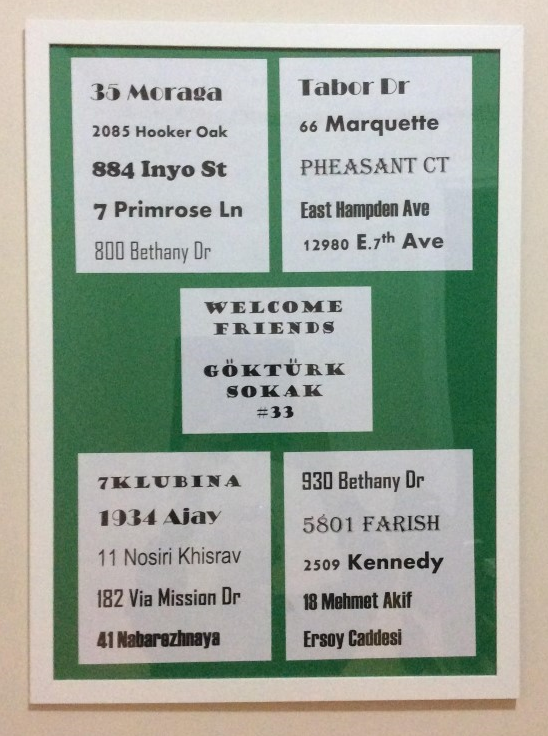
My wife thinks about everything. Looking back with gratitude is one of her strengths, and she finds creative ways to help even a nomadic family like ours to be grateful for the roots we do have. One example is the Places We Have Lived poster hung at the top of the staircase, a collection of random addresses which holds significance for us because we lived at that house number, on that street, in that town, for a season. Could have been 6 months or 6 years. Regardless, the address has a place on the poster, and in our hearts. That's what greets me at the top of the stairs.
I have some good friends back in the states who are really great about staying good friends. If you've ever lived far away from your homeland you know what I'm talking about. These are friends who make the effort to stay connected even though they live busy lives thousands of miles away.
Last year, following a trip to visit us in Turkey, they sent us a poster-sized collection of photos from our time together. It is titled "Forever Friends." The framed collage is hung at the other end of the staircase, opposite the Places We Have Lived poster. That's what greets me at the bottom of the stairs - a reminder that special people in our lives give meaning and significance to those addresses at the top of the stairs.

Two views from the stairs. One as I go up. One as I come down.
Both my wife and my friends have something in common. They know the importance of memories. They love to savor them and seal them up for a rainy day when the soul needs some encouragement. The ups and downs of transition are a good time to honor memories of people and places with a spirit of gratitude, to anchor ourselves in some part of our past when the future is uncertain.
“Memory is identity. Memory grounds us in who we are, where we’ve come from. Memory shapes us and guides us...Future identity and destiny, in other words, flower from a remembrance of things past.”
Think of the places you have lived. What kinds of feelings emerge? How could you honor those memories and the relationships connected with them? How might that help you move forward in your transition time?
“Remember those earlier days...So do not throw away your confidence; it will be richly rewarded.” -Hebrews 10:32, 35 NIV
Get help with your transition HERE