
Enlarge Your Capacity by Doing Less in Transitions
A common tension in transition revolves around the question of how to sustain a healthy balance between being and doing. While transition requires leaning into both, we often wrestle with finding a healthy cadence.
A common tension in transition revolves around the question of how to sustain a healthy balance between being and doing. While transition requires leaning into both, we often wrestle with finding a healthy cadence.
How does your style and temperament react to change? Do you tend to lean into your doing/task orientation side, while neglecting God's invitation to just be? Or, do you welcome and create space for rest and reflection, ending up with a long list of transition-to-do's, overwhelmed at the end of the day?
Navigating a transition back to the states following 20 years of life overseas, I vented to my counselor and rattled off all the reasons I was not getting a fair shake. He interjected something which stopped me in my tracks. He said, “Tim, have you taken time to breathe?”
It hit me: I needed to come up for air, but I was fighting it. I needed fresh perspective, and the only way for that to happen would be to enter into God's invitation to rest. At that juncture in transition, I needed to slow down and choose what I had been considering a luxury for later when the dust settled…reflection and rest. Yet, slowing down in transition was one of the best things I did for myself (and those around me).
Here I'm reminded of a quote by Charles Spurgeon:
Rest time is not waste time. It is economy to gather fresh strength…. It is wisdom to take leave. In the long run, we shall do more by sometimes doing less. (An All Around Ministry)
Indeed.
Difficult transitions are often complicated by decision fatigue, “the deteriorating quality of decisions made by an individual after a long session of decision making.” (Lark). If that's where you're at, why not linger a spell at the crossroads, allowing God's unhurried wisdom and counsel to take root in your heart, mind, and spirit?
Stand at the crossroads and look; ask for the ancient paths, ask where the good way is, and walk in it, and you will find rest for your souls. But you said, 'We will not walk in it.' — Jeremiah 6:16, NIV
Slowing down, noticing, and asking is God's prescription for the clarity and confidence we so desperately need in seasons of change. It's also the path to enlarged capacity.
When we pause long enough and observe closely, we just might find ourselves moving beyond merely looking at the fog and feeling the stress levels rise; we actually might see more options and opportunities as the fog lifts. At the very least, we will know more peace through the uncertainty. When we only define capacity as doing more, we miss when our capacity for being—in this case peace—grows.
The following exercises combine the doing and being components of transition. Done with intentionality, in community, and possibly with outside support such as coaching or spiritual direction, they will help you slow down and serve to inform your transition to-do list. Thus, your to-be and to-do list reflects what truly matters. Here are three exercises:
1. Values clarification helps us discover (or remember) our true north in transition seasons. Taking a deep dive into values clarity has a way of grounding us through the uncertainty of change. Knowing our needs and values serves to anchor us in what matters most and to prioritize those areas. From time to time at Global Trellis, we offer a full needs and values assessment and the opportunity to unpack your results within a group of like-minded individuals. For a start, you may want to try out this abbreviated needs and values worksheet and unpack your findings with a trusted friend or family member.
2. Discernment takes time and intentionality. Simply forming the questions we need to ask in transition is no easy task. Slowing down long enough to enter into conversations with God and His people helps solidify the important questions and top priorities. Here are some examples of great questions to ask in a season of discernment.
3. Rest, renew, and review on a regular basis. I've discovered it helps me to regularly sit with a set of reflection questions. Engaging with these questions weekly helps me celebrate wins, cultivate gratitude, re-align with my values, and decide my priorities. They aren't magical, but they are another way to cultivate a rhythm of purposeful reflection.
One final word of encouragement
Be prepared. You're up against far more than you can handle on your own. Take all the help you can get, every weapon God has issued, so that when it's all over but the shouting you'll still be on your feet. (Ephesians 6:13, The Message)
Transitions are opportunities to stand in the juncture of two or more paths and consider the options. When we take time to put on the brakes and stand in a crossroads, we are able to notice what lies in front of us with prayerful curiosity. We are more likely to end up in a good place when it's all said and done, with capacity for being able to handle all of the doing that transitions require.
A season of coaching can help you strike a healthy balance between being and doing in transition. Let’s have a conversation!
Schedule Custom Life Coach Call — Encompass Life Coaching
*This article was originally published on Global Trellis
The Payoff of Persistence
A little more persistence could be just what we need to make steady progress toward our goals and dreams. Often, the assumption is that doing more and going faster are the answers. Persistence with payoff, however, must be grounded in the substance of rest, reflection, and a good dose of play from time to time.
Scripture Focus: “Come to me, all you who are weary and burdened, and I will give you rest." - Matthew 11:28
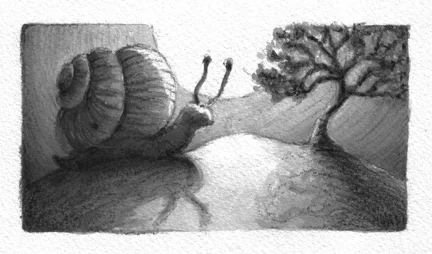
Slugs and Snails are abundant here in Istanbul. Until recently, I thought they were confined to the lower realms. Those tenacious little creatures have proven me wrong. One day last week my daughter and I marveled at a little snail which had managed to make its way up to our 2nd story kitchen window. Who says snails don't long for a higher realm, a place to catch a glimpse of something other than dirt and weeds? A bit of fresh air?
A few days later as I crawled out of bed and made my way to the bathroom, I almost stepped on a big slug meandering across the parquet floor. I was bewildered as to how a slug made it up to the third floor of my home AND managed to creep its way indoors! I must give credit to Istanbul slugs and snails for their persistence.
A little more persistence could be just what we need to make steady progress toward our goals and dreams. Often, the assumption is that doing more and going faster are the answers. Persistence with payoff, however, must be grounded in the substance of rest, reflection, and a good dose of play from time to time. This is one important aspect of self-care, giving us the staying power we need to make it to the finish line.
The slug, as it moves along, secretes a layer of mucus that it travels on, which helps prevent damage to the foot tissues (Yes, slugs do have feet!). Similarly, intentional time-outs for rest and reflection protect our souls from burnout. Like the snail confined to the ground, sometimes we lose heart, hope and strength because we fail to see the forest through the trees. Could it be time to step back, find a place of rest, and see from a new vantage point? What might God be waiting to show us? To give us?
Thought for the Day: Persistence which God rewards is grounded in rest.
Prayer: Jesus, as You invite me to come, You offer the enticement of rest. I accept Your invitation to enter into Your rest today. Help me to draw from your strength and grace in order to accomplish the work you've given me to do.
Image Source from the story Slugs and Snails by Jenny Blackford
