

Turning Setbacks into Switchbacks
Why setbacks are important and how they can be leveraged as switchbacks to help us gain altitude during a transition climb.
“The path leading me to meaningful work and a way to make a living from it has been a long and twisting one. What looked at the time like setbacks or defeats look to me now more like switchbacks that enabled me to gain altitude.”
I can relate to the above quote. Central Asian mountain ranges are some of the most rugged and steep in the world. While traveling throughout that land I grew accustomed to hours of tedious climbing in order to cover the distance of just a few miles. From time to time a detour was necessary due to a recent landslide or avalanche. The setback could delay travel plans by hours, even days. One of my personal travel setbacks can be viewed HERE
The slow and tedious task of climbing upward is a good reminder that life is also full of steep, slow climbs, and a setback from time to time. From one traveler to another, I confess I haven't always seen the purpose in all the twists and turns. I've often complained, Why Lord? Where is this all going?
Here's some thoughts on why setbacks are important and how they can be leveraged as switchbacks to help us gain altitude during a transition climb:
- Setbacks reinforce our true identity. Feelings of failure and loss of identity are common among those of us who have wrestled with difficult transitions. Yet when we pause to reflect upon what is really important following a setback, we come to see the value God places on us as his kids, apart from achievement, reputation, title and position. Setbacks become switchbacks when we allow ourselves to be reminded of our true identity, and then take that awareness into the next challenge or opportunity before us.
- Setbacks are good for recalibrating. Transition seasons often present us with a myriad of options to choose from as we plan our next steps. A good portion of them are simply distractions disguised as opportunities. While some may be valid options for us to consider, others just keep popping up and getting in the way, causing loss of focus. In actuality, a closed door or rejected proposal may be just what we need to re-adjust and move forward in our transition with better clarity. Setbacks become switchbacks when we allow the natural process of God's choosing and leading to unfold in His perfect yet mysterious ways.
- Setbacks provide opportunity for inward, personal growth to catch up with outward, professional growth. Throughout certain stages of life, everything seems to coast along with little or no sign of personal or professional change. Then, sometimes gradually and sometimes all of a sudden, we find ourselves in the middle of a transition season. As we take advantage of opportunities to pray, reflect and process the change, God will use those times to deepen our spiritual roots and reinforce personal values which may have been neglected. We will begin to experience renewed vitality emotionally and spiritually, and it will feel good!
I'm curious, What setbacks of 2015 has God used to strengthen your resolve and keep you climbing in the year ahead? Has an unexpected twist or turn thrown you off balance and into a transition tailspin? What growth agenda might God have planned for you during your current transition?
“You intended to harm me, but God intended it for good to accomplish what is now being done, the saving of many lives.” -Genesis 50:20 NIV
“And we know that in all things God works for the good of those who love him, who have been called according to his purpose.” -Romans 8:28 NIV
Climb your transition with a coach HERE

Forever Friends and Random Places We've Lived
The ups and downs of transition are a good time to honor memories of people and places with a spirit of gratitude, to anchor ourselves in some part of our past when the future is uncertain.
Every day I ascend and descend that set of stairs in our home multiple times. Bedroom to bathroom to kitchen to family room, and all over again. Up and down. Down and up. But today it was different. I noticed something. I paused long enough to be reminded that sometimes, especially in transition, I lose sight of what's really important.
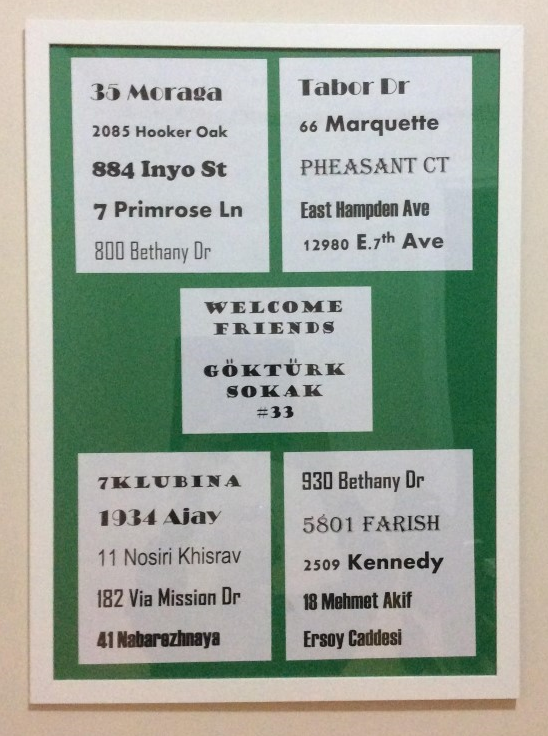
My wife thinks about everything. Looking back with gratitude is one of her strengths, and she finds creative ways to help even a nomadic family like ours to be grateful for the roots we do have. One example is the Places We Have Lived poster hung at the top of the staircase, a collection of random addresses which holds significance for us because we lived at that house number, on that street, in that town, for a season. Could have been 6 months or 6 years. Regardless, the address has a place on the poster, and in our hearts. That's what greets me at the top of the stairs.
I have some good friends back in the states who are really great about staying good friends. If you've ever lived far away from your homeland you know what I'm talking about. These are friends who make the effort to stay connected even though they live busy lives thousands of miles away.
Last year, following a trip to visit us in Turkey, they sent us a poster-sized collection of photos from our time together. It is titled "Forever Friends." The framed collage is hung at the other end of the staircase, opposite the Places We Have Lived poster. That's what greets me at the bottom of the stairs - a reminder that special people in our lives give meaning and significance to those addresses at the top of the stairs.
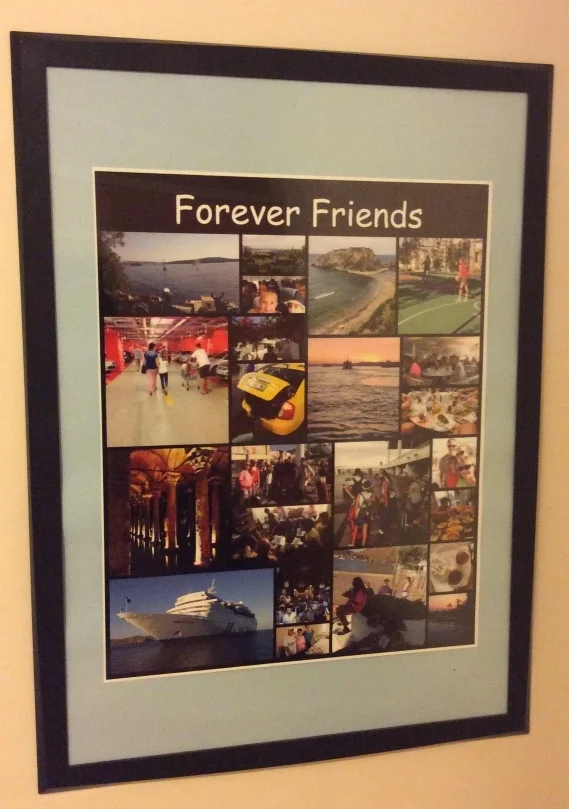
Two views from the stairs. One as I go up. One as I come down.
Both my wife and my friends have something in common. They know the importance of memories. They love to savor them and seal them up for a rainy day when the soul needs some encouragement. The ups and downs of transition are a good time to honor memories of people and places with a spirit of gratitude, to anchor ourselves in some part of our past when the future is uncertain.
“Memory is identity. Memory grounds us in who we are, where we’ve come from. Memory shapes us and guides us...Future identity and destiny, in other words, flower from a remembrance of things past.”
Think of the places you have lived. What kinds of feelings emerge? How could you honor those memories and the relationships connected with them? How might that help you move forward in your transition time?
“Remember those earlier days...So do not throw away your confidence; it will be richly rewarded.” -Hebrews 10:32, 35 NIV
Get help with your transition HERE
Transition: A Path to Clarity
Prolonged transitions can leave us longing for clarity. Here are some proactive steps we can take in order to successfully navigate these seasons of directional change...
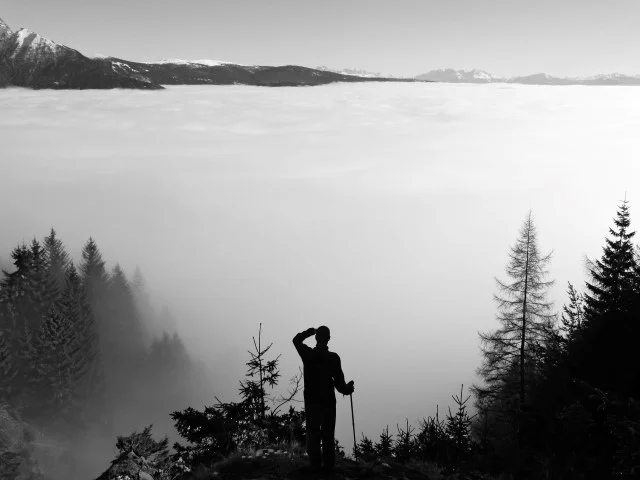
I want out of this fog! That's the cry of many people who find themselves blinded by transition, frustrated over their inability to gain clarity and move forward.
The Sacramento Valley where I'm from sometimes gets covered with a thick blanket of winter fog. I recall one particular time when it lingered for days. But a drive up into the foothills of the Sierra Nevada Mountains soon had me breaking out of the thick soup and into crisp, clean air and sunny skies.
Prolonged transitions can leave us longing for clarity. The contrast between confusion and clarity is stark, reminding me of the process of navigating transition. While feelings of unclearness are normal and even helpful at various points in the journey (more on how lack of clarity can be helpful in a future post), taking some proactive steps to aid in navigation can set us up for success.
1. Beef Up Your Support System. I recently became aware first-hand of my need for support through a major transition. The challenges were simply more than I could handle without additional support. This meant reaching out to a friend and asking if they'd be willing to meet regularly for mutual encouragement and prayer together. They were more than willing, and our regular skype calls have had a huge impact on my perspective and attitude through a season of personal transition. This leads me to another need which transition often highlights...
2. Process More. Whether you're a verbal or internal processor, introvert or extrovert, one thing is for sure: we all need to find ways to process transition in a healthy way. Without it, by default we choose a prolonged transition. This might mean creating more space in our schedules for prayer, reflection and journaling. Or talking regularly and intentionally about our transition with a spouse, friend, mentor, counselor or life coach. Get eclectic yet intentional about your processing. It will reap huge rewards and help you move toward more clear skies!
3. Process Less. Ok, I'm contradicting myself again, not an unusual characteristic of those in transition. But this time it's intentional. In our search for clarity, we often find ourselves having the same conversations again and again with influential people in our lives, such as a spouse, boss, or team leader. And it seems to be a repeat of misunderstandings and opposing ideas, all of which lead to further confusion rather than the clarity we seek. These dead-end dialogues are huge energy drainers, prolonging an already long transition season.
Although hard conversations can be a necessary part of transition, we may do well to ask ourselves, Is it the right time to return to this conversation? With this individual? Trusting God with our futures can sometimes mean processing less with some people, at least for a season, and trusting Him more with our futures.
4. Dream On. The ability to dream, to imagine a new future, is one sign that a tough life transition may be rounding the curve. Picture yourself rounding the bend, out of the fog and into clear skies. Seem like a dream now? Just wait. Dare to dream. And when you find it next to impossible to dream, allow God to do it for you:
“For I know the plans I have for you,” declares the Lord, “plans to prosper you and not to harm you, plans to give you hope and a future.” -Jeremiah 29:11 NIV
The important thing is this: to be able at any moment to sacrifice what we are for what we could become. -Charles DuBos
Gain clarity through your transition HERE
Thumbnail Image Source: http://fav.me/d8lnq1r