
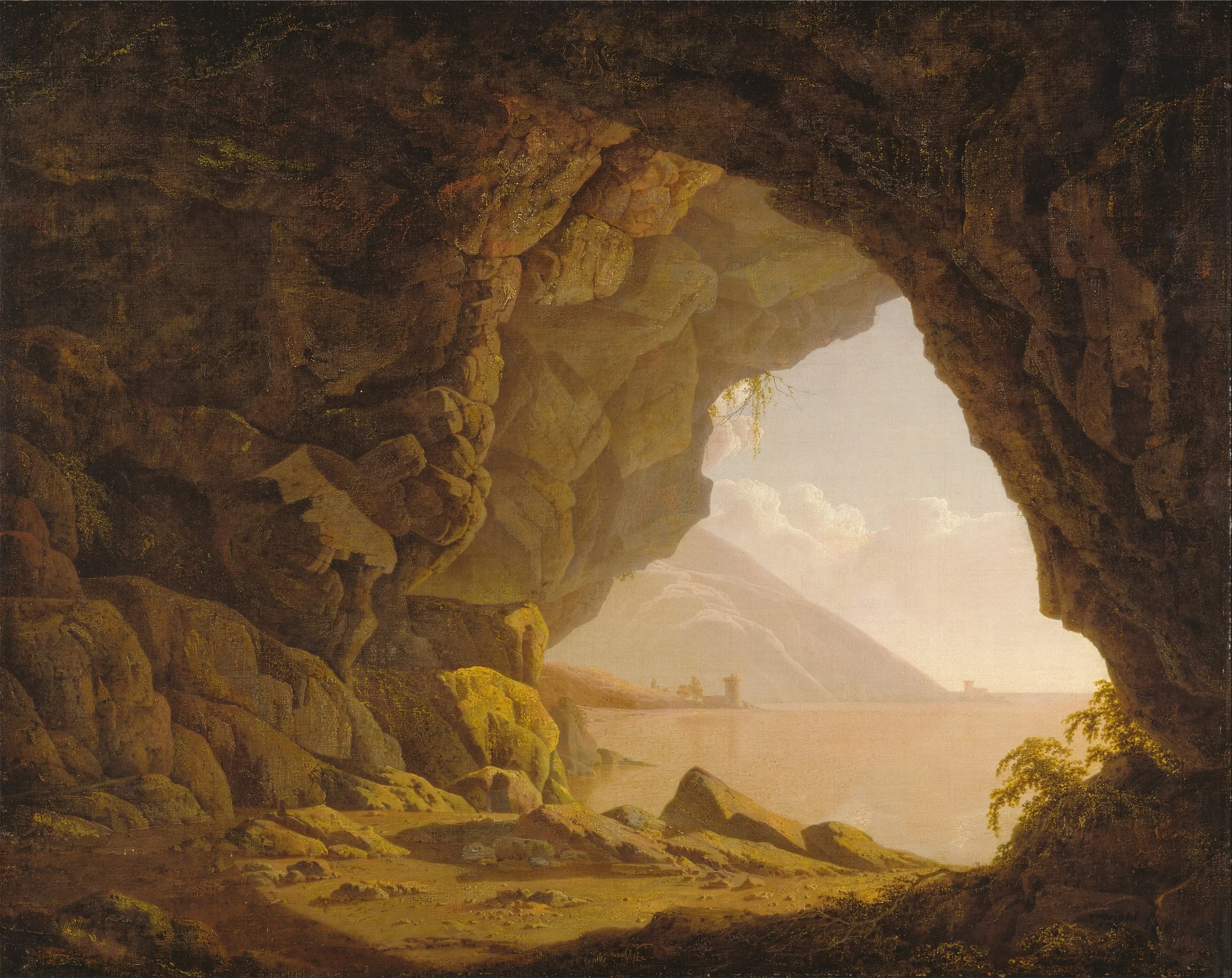
Soul-Care from the Cave
David was no stranger to caves. But this cave was more than a place of shelter for a tired shepherd boy. It was a place where he would learn resilience- how to relate to God in times of deep loss and confusion. How to steady his feet on God's promises and forge ahead with hope. Here are some ways we can learn, like David, to practice soul-care in the cave:
Read: I Samuel 22:1-2; Psalm 142 What does it look like to care for our own souls when hope feels like a distant memory? When what was promised is not delivered? David, forced to flee from a raging king, had made his temporary home in an abandoned cave. Bad news was imminent. Saul and his army were in hot pursuit, ready to take his life.
David was no stranger to caves. But this cave was more than a place of shelter for a tired shepherd boy. It was a place where he would learn resilience- how to relate to God in times of deep loss and confusion. How to steady his feet on God's promises and forge ahead with hope. Here are some ways we can learn, like David, to practice soul-care in the cave:
- Talk to God about your trouble. We can be brutally honest here. God is wise and sensitive, NOT fragile. He can handle our lists of complaints. I recently became extremely frustrated with a situation I was having to deal with. I was angry at others and God for not having solved my problems. In my frustration I said, "Leave me alone God! Lay off!" Those words surprised me as they came out of my mouth. I realized, however, that God was not shocked; he did not retreat. Those weren't the only words I said as I poured out my heart to Him. He heard every raw, gut-level complaint, and he loves me just the same. David said, "I pour out my complaint before him; I tell my trouble before him" (Psalm 142:2). We can tell God anything. He can't break and he won't run away.
- Know He Knows. We can be assured that God knows the exact place we're in and the trajectory we're on. He knows. From inside the cave, there is a lot we can't see, much we don't know. Our vision and perspective may be limited by things outside of our control. But rather than feeling forced into a corner by our limited understanding, we can choose to take advantage of the opportunities the cave gives to relate, reflect and regroup. There is a knowing which comes from this. We begin to say with David, "When my spirit faints within me, you know my way (Psalm 142:3). Yes, He certainly does.
- Give people the benefit of the doubt. People aren't always going to be in a position to help us. We come to seasons in life when nobody seems to understand or care. Those who try to help may give simple answers to complex questions. They just don't understand. This season in the cave is between us and God. That should release us from placing the burden of making it better on anyone else, and to accept them for who they are, not what they can or cannot do about our situation. David despaired, "there is none who takes notice of me; no refuge remains to me; no one cares for my soul." (Psalm 142:4) Fortunately that's not true all of the time. Just sometimes, and often in the cave.
I love how David ends his psalm in hope:
Bring me out of prison, that I may give thanks to your name! The righteous will surround me, for you will deal bountifully with me. - Psalm 142:7
I'm still learning the value of the cave, the treasures which God reserves for me when I'm willing to sit in the dark with Him for a season. How do you find ways to care for your soul in life's darker seasons? I'd love to add a few more strategies to my list.
Prayer: Jesus was sent into the wilderness (Matthew 4:1). David was forced into a cave. Whether I'm being sent to the hard places or feel forced into them by circumstances beyond my control, help me to know that You know my way. May I learn life-transforming lessons while walking with You in difficult times.
Image Source: http://all-free-download.com/free-photos/download/joseph_wright_art_artistic_218722.html
Presumption
After David was settled in his palace, he said to Nathan the prophet, “Here I am, living in a house of cedar, while the ark of the covenant of the Lord is under a tent.” Nathan replied to David, “Whatever you have in mind, do it, for God is with you.” - I Chronicles 17:1-2 Upon reading the above passage and the verses which follow, I was struck by my tendency to think and plan without taking the time to get the big picture. From a position of comfort and security, I start thinking I know what God needs and when he needs it. I start making plans and ask God to bless them. That's called presumption!
- Presumptuous thinking and planning often start with good intentions. David wanted to build a house that would honor God's name. But did God ever say he wanted a house, let alone that David would be the one to build it? David's motivation was good, but he lacked the broader perspective of what God was doing through the generations and with a whole nation. He lacked vision. He need God's perspective.
- Presumptuous thinking and planning is often rooted in comfort and security. David was settled in his palace. Comfort and security have a way of dulling our senses. The danger is to equate good times and good feelings with God's blessing and favor. I'm not saying that God doesn't desire to bless and give good gifts to his children; He certainly does. But King David was reminded that God's plan went far beyond his own personal comfort and present state of feeling blessed.
God was quick to remind David that He doesn't operate on a need basis. He doesn't need anything. Instead, He works to accomplish His vision for the sake of the people He loves and for the blessed future He envisions for them. He desires to communicate His vision to us so that we have the ability to partner effectively with Him.
Once God had spoken, I believe a burden was lifted from David's shoulders - the burden to do something for God which we often carry with us. The burden to please by doing something for Him rather than being with Him. That day I believe King David traded his self-induced, short term, presumptuous thinking for God's long-term vision. And just maybe, the king slept a little better that night as he reflected on God's words...
“‘I declare to you that the Lord will build a house for you..." - I Chronicles 17:10b